

- Scott Brenton
- 4 min read
How to read this page We have tried to describe the state of the research rather than the state of the marketing, which means this
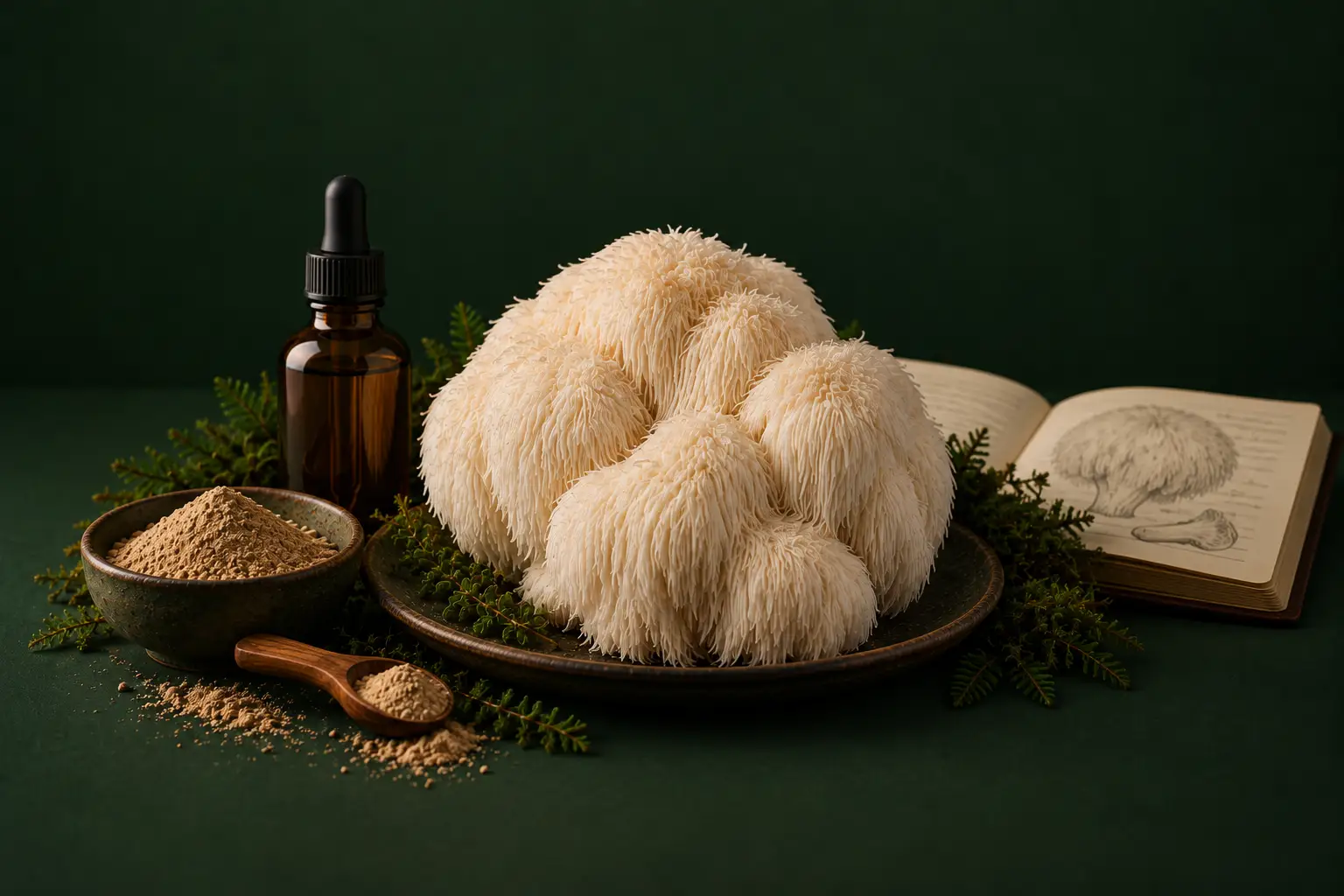
We have tried to describe the state of the research rather than the state of the marketing, which means this page is less exciting than most pages about this mushroom. Nothing here is medical advice, and nothing here should be read as a claim that this mushroom treats, prevents or cures any condition. If you are considering a supplement — particularly alongside prescription medication — that is a conversation with a clinician, not a website.
Lion’s mane contains two families of compounds — hericenones, found in the fruiting body, and erinacines, found mainly in mycelium — that have been shown in laboratory work to stimulate the synthesis of nerve growth factor (NGF), a protein involved in the growth, maintenance and survival of neurons.
That is a genuinely interesting mechanism and it is unusual: relatively few dietary compounds interact with neurotrophic signalling at all. It is the reason lion’s mane appears in every nootropic product on the market.
In cell cultures and animal models, lion’s mane extracts have been associated with increased NGF expression, improved markers of nerve regeneration, and performance changes in animal cognitive and behavioural tests. This literature is reasonably substantial and reasonably consistent.
The standard caution applies with full force. Cell cultures and rodents are where most promising interventions look best, and the great majority of compounds that perform well at this stage do not survive contact with human trials. This is not a criticism of the research — it is how the pipeline works.
There are human trials, and they are the reason lion’s mane is taken more seriously than most functional mushrooms. There are also serious limits to them:
The fair summary: there are early human findings that justify further research, and there is not enough evidence to support a confident claim about what lion’s mane does for a healthy person. Anyone telling you otherwise has read the marketing rather than the papers.
“Promising early research” and “clinically proven” are separated by years of work and a great deal of money. Lion’s mane is firmly in the first category, and a lot of packaging implies the second.
A real distinction here, and one worth knowing. Hericenones concentrate in the fruiting body — the white spined mushroom you cook. Erinacines concentrate in the mycelium. Products differ accordingly, and a mycelium-on-grain product sold whole includes a great deal of grain. See functional mushroom forms for how to read a label.
Lion’s mane has a long history as food and is generally well tolerated. Reported issues are mostly mild and gastrointestinal, and skin reactions have occasionally been described. People on anticoagulants, people with bleeding disorders, and people who are pregnant or breastfeeding should ask a clinician before supplementing, as should anyone taking any regular medication. As food, cooked and in normal quantities, it is a mushroom.
Buy lion’s mane because it is a genuinely excellent thing to eat — it tastes like crab, it has a texture nothing else matches, and crab cakes and pressed steaks are two of the best dishes on our recipe pages. That reason is complete on its own and requires no research at all.
If you want it for the mechanism, buy a properly specified extract, keep your expectations calibrated to the evidence, and talk to your doctor. Do not expect a mushroom in a pan to do what a laboratory dose did in a rat.
There are small, short human trials with mixed results, alongside more substantial preclinical work on nerve growth factor signalling. The evidence justifies further research; it does not support a confident claim.
Two families of compounds in lion’s mane associated with nerve growth factor synthesis in laboratory studies. Hericenones concentrate in the fruiting body, erinacines in the mycelium.
They are different things. Cooking gives you excellent food and modest nutrition; extracts deliver a far higher and more consistent dose of the studied compounds. Neither is proven to produce a cognitive outcome.
It has a long history as food and is generally well tolerated, with mild gastrointestinal effects occasionally reported. Anyone on anticoagulants, with a bleeding disorder, or pregnant or breastfeeding should consult a clinician before supplementing.
Share this article
How to read this page We have tried to describe the state of the research rather than the state of the marketing, which means this

How to read this page We have tried to describe the state of the research rather than the state of the marketing, which means this

How to read this page We have tried to describe the state of the research rather than the state of the marketing, which means this
Grab a beginner-friendly kit and apply what you just read —
or start with our beginner’s guide to find the right first grow.