

- Scott Brenton
- 10 min read
A walk along Left Hand Creek in Longmont, Colorado, one October evening turned up an unexpected sight: a faint green glow coming off a rotting
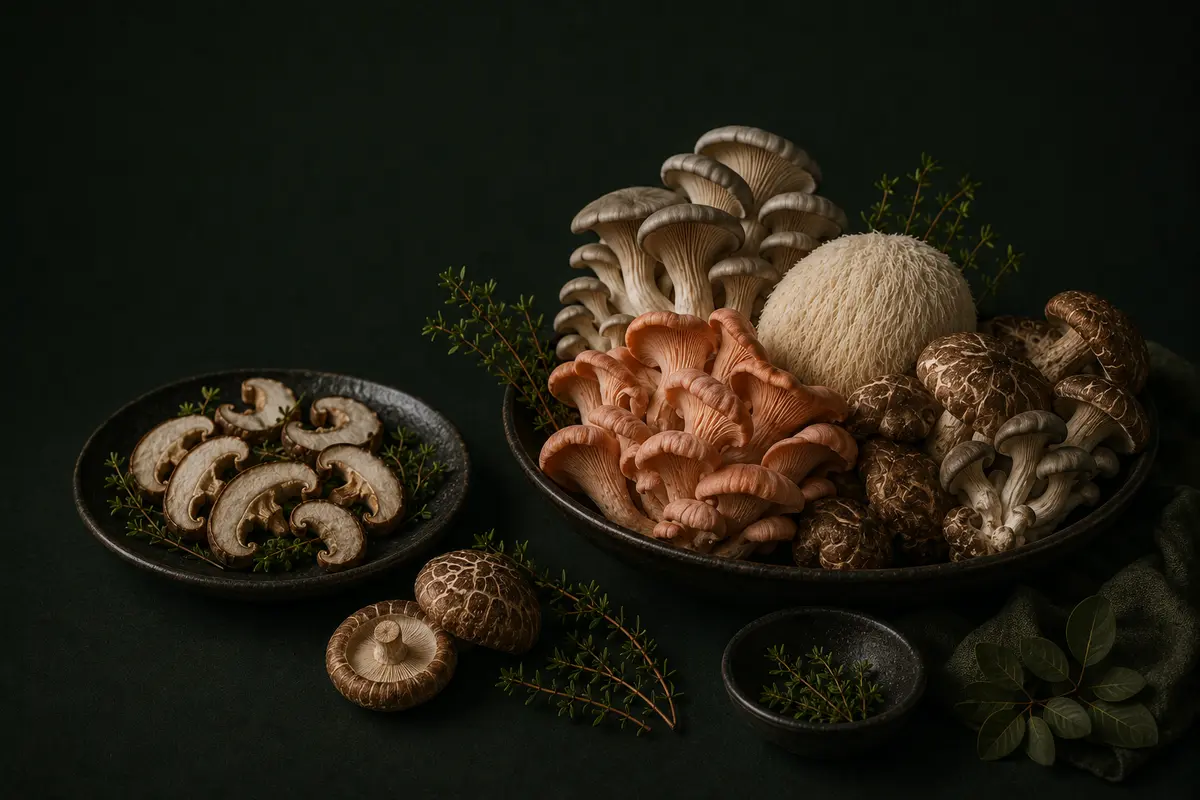
A line cook in a Boulder kitchen once wondered aloud why the oyster mushrooms on his prep table smelled faintly of the walk-in cooler instead of the woods where they supposedly grew. The direct answer, for any Colorado restaurant trying to figure out how to source fresh local mushrooms, is this: buy straight from a small batch grower who harvests to order, like Foxfire Mushrooms in Longmont, instead of routing everything through a broadline distributor where the mushrooms sit for a week before they ever reach the line. Sourcing local mushrooms for Colorado restaurants is mostly a timing problem, not a taste problem, and the path a kitchen chooses decides how many days old the product actually is by the time it hits a plate.
Quick Facts — Focus region: Front Range, Colorado – Typical order lead time: 24 to 48 hours – Common wholesale minimum: none required for most small farms – Harvest to delivery window: same day or next day – Free shipping threshold on retail orders: $75 – Species commonly available: Blue Oyster, Pink Oyster, Lion’s Mane, Shiitake
Mushrooms have a very high water content, and postharvest research generally shows that most cultivated species, shiitake and oyster mushrooms among the most studied, begin losing structural quality fairly soon after being cut. A tomato can ride in a truck for a week and still taste like a tomato. A mushroom typically cannot. Studies on shiitake, for example, have observed noticeable softening and quality decline within roughly one to three days at room temperature, with cold storage generally extending that window to around five days or longer depending on species and conditions. The exact timeline varies by mushroom type and how it is handled, but the broader pattern, that texture and flavor decline steadily after harvest rather than holding steady until an expiration date, is well supported in the research.
A Blue Oyster harvested that morning has a snap to the stem and a slightly sweet, almost anise like smell. The same species that traveled through two or three distribution points before reaching a restaurant tends to taste flat and a little muddy, even within date. That gap between texture on paper and texture on a plate is the practical reason freshness gets treated as a sourcing decision, not just a marketing line.
There are four paths a kitchen can take, and each trades off differently on freshness, price, and reliability.
Farmers markets get you fresh product, but only on the days the market runs, and volume is limited. A chef building a Saturday brunch special around chanterelles from a market vendor is fine. A kitchen that needs a large, predictable volume of shiitake every week will run into trouble, since market vendors are not set up to guarantee that kind of standing supply.
Broadline distributors solve the volume and consistency problem, and for a lot of ingredients that is the right tradeoff. For mushrooms specifically, you are usually buying product grown outside Colorado, aggregated at a regional warehouse, and trucked in, so by the time it lands on your dock it may already be four or five days removed from harvest.
This is where a wholesale partner like Foxfire fits. A direct relationship gives you same day or next day harvest with a standing order you set up once and adjust as needed, without the seasonal gaps of a market or the transit time of a distributor.
Some kitchens grow a portion of what they use, usually starting with a countertop grow kit for a gourmet specialty item like Lion’s Mane before deciding whether to scale up with grain spawn and bulk substrate. This rarely replaces a wholesale account for a full menu, but it can work well for a single signature dish.
| Farmers Market | Broadline Distributor | Direct Farm Wholesale | |
| Typical time from harvest | Often 0 to 2 days | Frequently 4 to 7 days | Usually 0 to 1 day |
| Volume reliability | Low, seasonal | High | Moderate to high with advance notice |
| Price per pound | Variable, sometimes premium | Generally lowest | Mid range, often close to broadline |
| Species selection | Limited to what’s picked that week | Broad but mostly common species | Farm dependent, can include specialty varieties |
| Order minimums | None | Often required | Frequently none or low |
| Best fit | Specials, small volume | High volume, price sensitive kitchens | Chefs prioritizing flavor and freshness |
Setting up a wholesale account with a small Colorado grower does not require much paperwork. You reach out, usually through a wholesale inquiry form or a phone call, and talk through what species you want and roughly how many pounds a week. The farm tells you what is realistically available given current grow cycles, since mushrooms are not something you can conjure overnight if a species is between flushes. From there you agree on a delivery schedule, often weekly or twice weekly, and the farm harvests to fill that order rather than harvesting first and hoping someone buys it. Foxfire also offers grower consultations for restaurants that want help working out delivery cadence or species selection before committing to a standing order.
One thing worth knowing going in: small growers cannot always guarantee unlimited quantity of every species every week the way a distributor can. A grow room only produces what it produces. Before building a menu item around a specific mushroom, ask the farm directly what weekly volume they can realistically sustain for that species. Foxfire is upfront about this with restaurant partners, since promising volume a small batch lab cannot deliver would create a bigger problem later.
Any mushroom farm a Colorado kitchen is considering should be able to answer a few questions plainly. Ask how cultures are tested for contamination before they go into production; a farm that cannot answer this clearly is trusting quality to chance. At Foxfire, every liquid culture and grain spawn batch is tested in the Longmont lab before it moves into fruiting, which matters far more for a kitchen buying pounds at a time than for a home grower harvesting one flush.
Ask about harvest to delivery timing, not just how fresh something is. Ask whether the farm can flex volume seasonally, and what happens if a delivery does not meet expectations. Foxfire backs every retail grow kit with a live arrival guarantee, and that same standard, fix it rather than shrug it off, is what a restaurant partner should expect on a wholesale order too.
What happens after delivery matters just as much as how the mushrooms arrived. Trapped moisture speeds up spoilage, so mushrooms held in a sealed plastic bag will soften and sweat faster than mushrooms stored in a breathable container or paper lined tray. Keeping them cold, around 34 to 38 degrees, with some airflow rather than an airtight seal, can add several extra usable days on the line.
Pricing is usually the first question a chef or purchasing manager asks. Direct farm wholesale pricing tends to land close to broadline distributor pricing per pound, sometimes a little higher, but rarely by much, and this is a general pattern rather than a fixed rule, so confirm current rates directly with the farm. What changes more consistently is what a kitchen gets for that price: mushrooms from a small farm typically arrive with more usable shelf life still ahead of them, since they started fresher, which means less product gets thrown out at the end of a slow week. Specialty species like Lion’s Mane or Pink Oyster are where local sourcing tends to pull ahead on price, since those are the items distributors carry in smaller volume and mark up for scarcity.
Some kitchens start with a grow kit or two on the pass before committing to a full wholesale account, partly for the visual of live mushrooms fruiting in house and partly to get a feel for a species before ordering in bulk. A single kit or a small order under Foxfire’s $75 free shipping threshold is a low pressure way to trial something like Shiitake, and it doubles as a talking point for front of house staff describing the dish that night.
Colorado’s climate swings hard between seasons, which matters more for outdoor foraged mushrooms than for lab grown ones. A farm growing in a controlled Longmont lab is not at the mercy of a dry August or an early frost the way a forager chasing wild chanterelles is. Even indoor growers see some natural variation tied to grow cycles, so a chef building a menu around a specific mushroom should still ask a supplier directly about typical turnaround rather than assuming supply is unlimited. It usually is not, and a farm that says so upfront is worth trusting more, not less.
If your kitchen is ready to stop guessing how many days old the mushrooms actually are, reach out to Foxfire’s wholesale team about setting up a standing order. Foxfire Mushrooms has been growing in Longmont since 2021 and now supplies restaurants, markets, and home growers across the Front Range and beyond. Tell them what species your menu needs and roughly how many pounds a week, and they will walk you through a realistic delivery schedule from their lab to your kitchen door.
Most small farms ask for at least 24 to 48 hours notice on standing orders. Ordering further ahead gives the farm room to time the harvest to your delivery window rather than pulling from whatever happens to be ready.
This depends on the farm’s setup and your location. Some Front Range farms deliver within a certain radius of their lab, while others expect restaurant partners to arrange pickup.
Not dramatically, in most cases. Pricing tends to land close to distributor rates per pound, with specialty species sometimes coming in cheaper locally since distributors mark up scarce items more aggressively. Confirm current pricing directly with the farm rather than assuming a fixed markup.
Blue Oyster, Pink Oyster, Lion’s Mane, and Shiitake are the species most Front Range growers, including Foxfire, produce reliably year round because they grow well in controlled indoor conditions.
Yes, most small growers do not enforce large order minimums the way broadline distributors do, which makes local sourcing realistic for smaller kitchens testing a new item.
Ask directly what the lab testing process looks like before a culture goes into production. A farm with nothing to hide will explain it clearly, including how it isolates contaminated batches before they reach a customer.
For a specialty item used in small quantities, a grow kit can work as a supplement, mostly for freshness on the exact day of service. For real volume, a wholesale relationship with a local farm is almost always more practical.
Share this article
A walk along Left Hand Creek in Longmont, Colorado, one October evening turned up an unexpected sight: a faint green glow coming off a rotting

A pound of fresh Lion’s Mane can lose quality quickly when it sits unrefrigerated, going soft and faintly sour within a day, which is why

A countertop covered in mushrooms after a strong flush is a familiar problem for home growers, and the question that follows just as fast is
Grab a beginner-friendly kit and apply what you just read —
or start with our beginner’s guide to find the right first grow.