

- Scott Brenton
- 13 min read
A pound of fresh Lion’s Mane can lose quality quickly when it sits unrefrigerated, going soft and faintly sour within a day, which is why
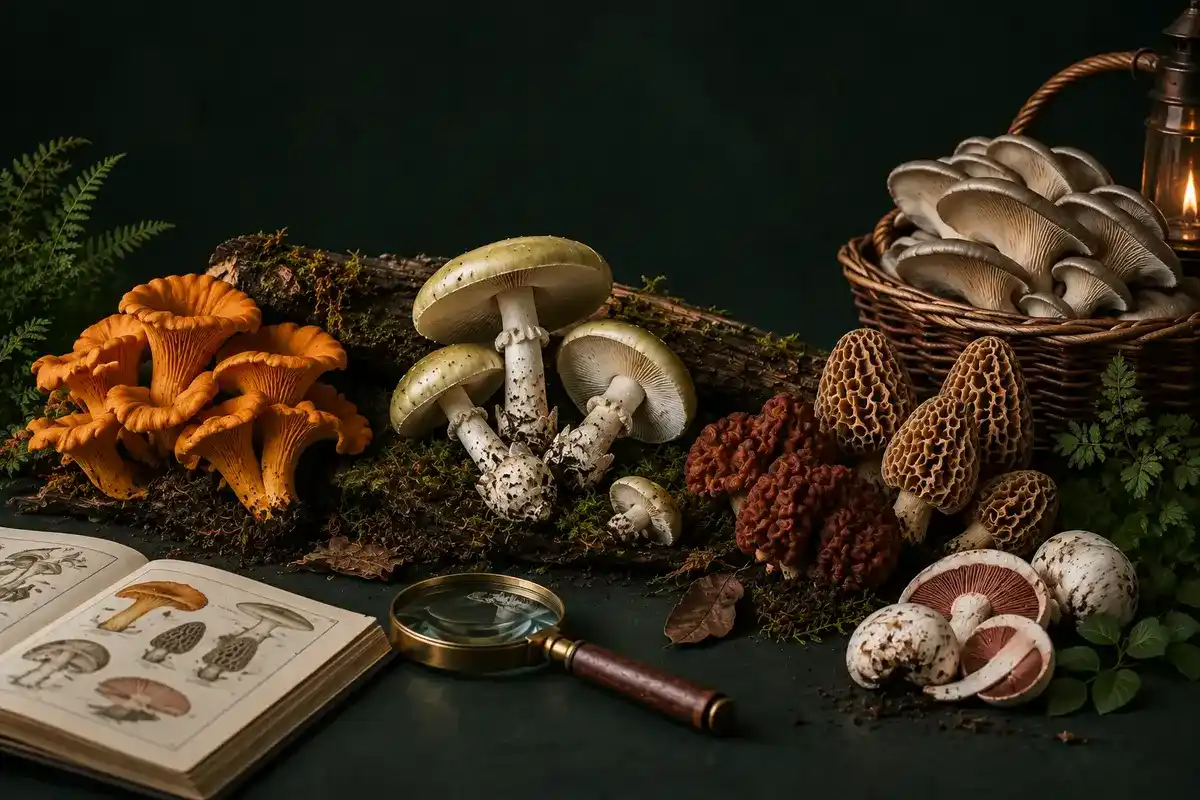
A walk along Left Hand Creek in Longmont, Colorado, one October evening turned up an unexpected sight: a faint green glow coming off a rotting cottonwood stump. The glow was foxfire, the old term for bioluminescent fungus and the actual phenomenon Foxfire Mushrooms takes its name from. The mushroom producing it was a Jack O’Lantern, one of the most common toxic mushroom lookalikes around, since in daylight it can pass for a chanterelle. The short answer to why that matters: almost nobody who gets sick from a wild mushroom picked it on purpose. Many serious mushroom poisonings begin when a poisonous species is mistaken for an edible one, over one missed detail, a gill color, a spore print, a ring at the base of the stem, that would have given it away.
Quick Facts — Species considered dangerous to humans: a small share of all known mushrooms – Death cap share of fatal poisonings: 90 to 95 percent – Amatoxin symptom delay: 6 to 24 hours – Cooking neutralizes the toxin: No – Most confused pairs: death cap and straw mushroom, false morel and true morel, jack o’lantern and chanterelle
Only a fraction of known mushroom species are poisonous, but some toxic species closely resemble mushrooms that people intentionally forage for food. The problem is that a handful of those species are common, grow exactly where foragers already search, and share enough visual traits with a prized edible that the difference only shows up once someone checks one specific feature: gill color, spore print color, a buried sac at the base of the stem, or whether the stem is hollow all the way through. Skip that check and the identification is based on a general impression, which is exactly how the mistakes happen.
Overconfidence can turn a small identification mistake into a dangerous one. A handful of habits keep showing up in the same reports.
A common assumption is that if a squirrel or slug has been nibbling a mushroom, it must be safe for a human too. Animal digestion handles amatoxins differently than human digestion does, so a partly eaten death cap is still a death cap.
Some foragers were taught that a mushroom is safe if the cap skin peels away in one clean piece, a feature genuinely true of some edible Agaricus species. Several toxic Amanita species peel just as cleanly under the right conditions, so the test does not hold up.
Taste and smell are not reliable warning signs. Death caps are frequently described as mild or even pleasant tasting, which is part of what makes them so dangerous, since nothing about that first bite signals a problem before symptoms begin.
Identification apps help narrow options, but the North American Mycological Association has warned against relying on AI based apps as a final check, since they routinely match toxic lookalikes to edible counterparts on color and shape alone. A regional field guide plus an in person check from a local mycological society catches what a photo cannot.
Young and mature mushrooms of the same species can look almost unrelated. Caps flatten, gills darken, and the crisp features a field guide relies on start to blur, which is when a physical check tends to slide into pattern matching against memory.
These are four important toxic lookalike pairings that foragers should recognize.
| Toxic Lookalike | Often Mistaken For | Key Difference |
| Death Cap (Amanita phalloides) | Paddy Straw Mushroom (Volvariella volvacea) | Death caps have white gills and a cup shaped volva buried at the base, sliced off if the stem isn’t dug up whole. |
| False Morels (Gyromitra species) | True Morels (Morchella species) | Slice it open. True morels are hollow from cap to stem. False morels are chambered or packed with cottony tissue. |
| Destroying Angel (Amanita bisporigera) | Meadow Mushroom (Agaricus campestris) | Destroying angels keep white gills and a white spore print their whole life. Meadow mushrooms turn pink, then chocolate brown, as they mature. |
| Jack O’Lantern (Omphalotus illudens) | Chanterelle (Cantharellus species) | Jack O’Lanterns have true, blade thin gills on an orange stem and grow in clusters on wood. Chanterelles have blunt false gills and grow singly from soil. |
The death cap pairing carries the most weight of the four, since it causes the large majority of fatal mushroom poisonings worldwide, and children can be more vulnerable to the same dose than adults. In the United States, most amatoxin poisonings cluster in the Pacific Northwest, though Amanita species turn up in oak woodlands throughout the country, so regional assumptions about safety do not hold up on their own.
Amatoxin poisoning can begin with a symptom free period lasting 6 to 24 hours, followed by vomiting and abdominal cramping. Those symptoms may temporarily improve before serious liver and kidney injury develops. Because the early period can look deceptively mild, anyone who may have eaten a poisonous wild mushroom should seek medical attention immediately rather than waiting for symptoms.
No single feature is enough to establish that a wild mushroom is safe to eat. The observations below can help with identification, but they should not be treated as a home test for edibility.
A volva is often buried a couple of inches underground. Cutting the stem at soil level slices through it and erases the one warning sign that would have flagged the mushroom as dangerous.
Many of the same dangerous Amanita species carry a delicate ring, called an annulus, around the upper stem, left by the veil that once covered the gills. It is a useful second flag alongside the volva, though it can fall off with age, so its absence alone does not clear a mushroom.
Laying the cap gill side down on paper, half white and half black, and covering it overnight produces a spore print. A spore print can provide useful identification information, including spore color, but it is only one part of the identification process and should never be treated as proof that a wild mushroom is safe to eat.
A hollow interior straight through separates a true morel from a chambered false one. The same cut test applies to anything resembling a small white egg at ground level, since young destroying angels are still wrapped in their universal veil at that stage and get mistaken for puffballs regularly. Habitat matters too: a Jack O’Lantern grows in a cluster out of dead wood, a chanterelle singly out of the forest floor.
An experienced local identifier can catch physical and habitat details that a photograph or solo identification may miss, but no informal check should be treated as a guarantee that a wild mushroom is safe to eat.
Foxfire’s approach removes the identification problem this guide is about. Every strain the company sells, from a Blue Oyster grow kit to a Lion’s Mane liquid culture syringe, starts from a single verified culture that gets spore printed and tested for contamination in Foxfire’s Longmont lab before it goes into production. Agar plates can look clean yet still carry a slow growing contaminant that only surfaces once a culture is colonizing a bag, which is why cultures get tested more than once.
That kind of lab testing is different from species identification, and it does not automatically extend to wild mushrooms sold at a farmers market or by an independent forager, since the species still depends on whoever picked it getting the field identification right. For a Foxfire kit, the guesswork above is sidestepped entirely, since the species is confirmed before the box ships. No gill count, no spore print, no volva or ring check required. Kits start around $27.99, shipping is free on orders over $75, and every kit carries a live arrival guarantee.
The mistakes covered in this guide, misjudging a peel test, trusting an app, missing a buried volva or a fallen ring, are all specific to wild foraging. Growing at home from a verified culture sidesteps them completely, since the species is already known before the kit leaves Longmont. Shop Foxfire’s cultivated grow kits to start with a known mushroom species, or book a consultation for help planning a first indoor grow. Knowing exactly what is fruiting on the counter, without a single guess involved, is a fairly good feeling.
No. Animal digestion processes amatoxins differently than human digestion does, so chewed edges say nothing about whether a mushroom is safe for a person to eat.
Not always. Amatoxins are heat stable, so boiling, frying, or drying will not neutralize them. Gyromitrin in false morels behaves similarly, which is why the cut test matters more than how the mushroom is later cooked.
No. Death caps are commonly described as mild or even pleasant tasting, which is part of what makes them so dangerous, since nothing about the flavor signals a problem before symptoms appear hours later.
Amatoxin symptoms are often delayed 6 to 24 hours. That delay is exactly why the case is urgent even when someone feels fine, since liver damage can already be progressing by the time nausea appears.
No. A Foxfire grow kit or liquid culture starts from a single verified strain tested in Foxfire’s lab before it ships, so the species is already known from day one.
Call Poison Control or go to an emergency room right away, even if the person feels fine, since symptoms can take hours to appear. Bringing a sample or photo helps clinicians identify the species and treat accordingly.
Treat an app as a starting point, not a verdict. Photo based apps regularly misidentify toxic lookalikes for edible species, so any wild find should be confirmed with a local mycological society or an experienced forager before it gets eaten.
Share this article
A pound of fresh Lion’s Mane can lose quality quickly when it sits unrefrigerated, going soft and faintly sour within a day, which is why

A countertop covered in mushrooms after a strong flush is a familiar problem for home growers, and the question that follows just as fast is

Restaurant owners, small farms, and shop buyers researching wholesale mushrooms Colorado sourcing usually land on the same question after scrolling past the marketing page: what
Grab a beginner-friendly kit and apply what you just read —
or start with our beginner’s guide to find the right first grow.