

- Scott Brenton
- 10 min read
A walk along Left Hand Creek in Longmont, Colorado, one October evening turned up an unexpected sight: a faint green glow coming off a rotting
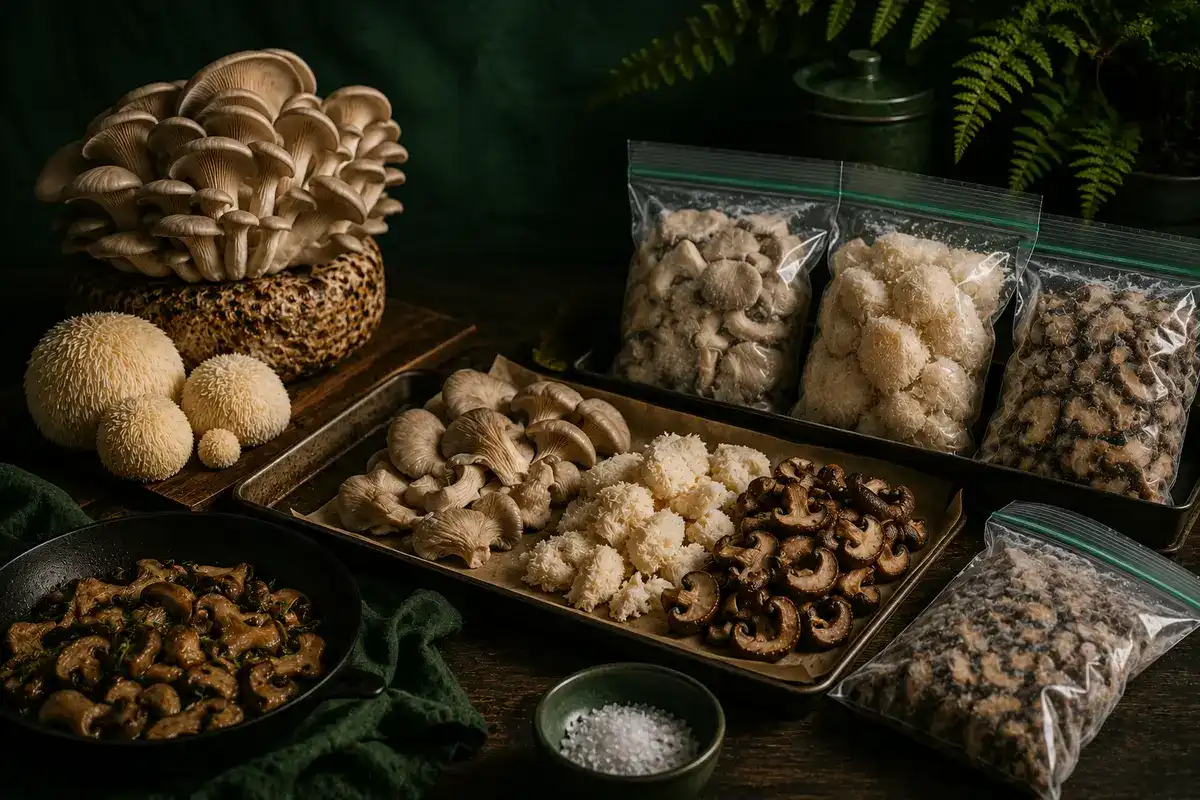
A countertop covered in mushrooms after a strong flush is a familiar problem for home growers, and the question that follows just as fast is whether freezing turns a good harvest into gray mush by the time it gets used. It does not have to. Fresh mushrooms can be frozen for long term storage, but nearly every species holds up better cooked first rather than tossed raw into a bag, and that one step separates a mushroom that still tastes like harvest day from one that tastes like wet cardboard. A flush like that, grown from a Foxfire Mushrooms kit, is exactly the kind of surplus this method is built for.
Quick Facts — Best method: cooked then frozen – Raw freeze works: not recommended – Freezer shelf life: 8-12 months – Ideal storage temp: 0°F or below – Thaw time: no thaw needed, cook from frozen – Texture change: softer, best in cooked dishes
Yes, and the process is more forgiving than most people expect once the basic trick is known. The most common question, whether mushrooms can be frozen raw straight off the counter, has a short answer of technically yes, practically no. Mushrooms are mostly water, widely cited at around 90 percent by weight, and that water content is generally understood to be the main reason freezing changes their texture.
The commonly cited explanation is that ice crystals form in the water inside mushroom tissue during freezing, and as those crystals melt during cooking, the structure that gave a fresh mushroom its bite has typically already broken down. This is less a preparation mistake than an expected outcome of freezing a food with such high water content, and once that is understood, freezing becomes a practical way to hold a harvest for soups, stir fries, and sauces later on.
Oyster mushrooms, including the Blue Oyster and Pink Oyster kits Foxfire sells, freeze cleanly since their thin caps cook down fast and evenly. Lion’s Mane holds up well too, especially when torn into chunks rather than sliced thin, since the shreddy texture hides the softening better than a flat slice would. Shiitake is the trickiest of the three, since the stems tend to turn tough and stringy in the freezer regardless of prep. Trimming and freezing the stems separately for stock, while freezing only the caps for eating, solves that problem.
| Mushroom | Freezes well | Best prep before freezing | Best use after thawing |
| Blue and Pink Oyster | Excellent | Cook in a little butter until nearly done | Stir fries, soups |
| Lion’s Mane | Very good | Tear into chunks, cook lightly | Sauces, sandwiches |
| Shiitake caps | Good | Cook in butter or steam briefly | Broths, stir fries |
| Shiitake stems | Fair | Freeze raw, whole | Stock only |
The National Center for Home Food Preservation, run by the University of Georgia’s Cooperative Extension, lists two accepted home methods rather than one. Mushrooms can be steamed briefly after a short dip in a lemon juice or citric acid solution to protect their color, or heated in a small amount of butter or margarine in an open pan until nearly done. Cooking in butter is generally the quicker option and adds more flavor going into the freezer, while steaming keeps a paler, more neutral result that suits delicate dishes better. What should not happen is skipping the cooking step entirely. Raw mushrooms frozen straight from the counter generally do not hold up well, and in practice, no amount of seasoning fixes that texture later.
| Method | Flavor after thawing | Texture after thawing | Best for |
| Cooked in butter, then frozen | Rich, savory | Firm for a frozen product | Everyday cooking, smaller batches |
| Steamed with a lemon dip, then frozen | Milder, cleaner | Slightly softer | Delicate dishes, larger batches |
| Frozen raw, no cooking | Weakest, can taste flat | Mushy and waterlogged | Not recommended |
The full process takes roughly twenty minutes for a typical harvest. Wash the mushrooms thoroughly in cold water and trim the stem ends, then slice or quarter anything larger than about an inch across, since pieces will not shrink any further once frozen. Heat a small amount of butter or margarine in an open pan and cook until nearly done, which usually means the liquid the mushrooms release has mostly cooked away. Cool the pieces, either in open air or by setting the pan in a bowl of cold water, then spread them on a tray so they are not touching and freeze for one to two hours.
Once frozen solid individually, transfer the pieces into a freezer bag or rigid container, leaving a little headspace and pressing out as much air as possible before sealing, since trapped air is what leads to freezer burn over a long storage period. That flash freeze step on the tray keeps the mushrooms loose enough to scoop a handful from later, instead of one solid block that has to be thawed all at once.
Fruits and vegetables, mushrooms included, generally hold good quality for 8 to 12 months at 0°F or below, based on the general home freezing guidelines published by the National Center for Home Food Preservation. They remain safe to eat well past that window, but the flavor and texture start fading noticeably after about a year, developing a flatter taste and a slightly rubbery bite. Labeling each bag with the mushroom variety and the freezing date prevents the common mixup of confusing an early season batch with a later one once several harvests have gone through the same freezer.
Skipping the cooking step and freezing mushrooms raw is the most common one, usually from assuming the texture issue can be dealt with later. Raw frozen mushrooms tend to thaw into a slippery, waterlogged texture that seasoning does not correct, so this should only happen in a genuine emergency with no time and no stove available. Packing mushrooms into a bag while still warm is another frequent mistake, since the trapped heat can create condensation, which tends to form ice crystals and clump pieces together. Leaving too much air in the bag before sealing is associated with the same kind of damage over time, showing up as pale, dried out patches on the pieces closest to the surface, which is generally recognized as freezer burn.
Frozen cooked mushrooms generally do not need to be thawed at all. They can go straight from the freezer bag into a hot pan, soup pot, or simmering sauce and will heat through in a few minutes without a separate thawing step. The one place they do not work well is anywhere they need to look fresh, such as a raw salad topping or a garnish, since the softened texture gives away that they were frozen no matter how good the flavor is. Frozen mushrooms function best as an ingredient for cooked dishes rather than a stand in for the fresh ones sitting on a counter.
Humidity inside a grow room or fruiting chamber often builds as the day goes on, so it is reasonable to expect that mushrooms picked in the morning may carry somewhat less surface moisture than the same flush picked later in the afternoon, though this is not something backed by a specific published study on home growing conditions. Less surface moisture going into the pan would mean less water working against the cook down step, which could plausibly lead to a cleaner result once the mushrooms come out of the freezer months later. It remains a small, untested detail rather than a proven rule, but picking earlier in the day is a low effort habit worth trying for anyone harvesting with freezing in mind.
Having more of a harvest than the kitchen can use right away is a good problem to have. A Blue Oyster or Lion’s Mane grow kit from Foxfire Mushrooms typically produces its first flush in 7 to 14 days, often more than a first time grower expects, and every kit is backed by a live arrival guarantee. Once a flush comes in heavier than planned, cook what will get eaten that week and freeze the rest using the method above. Orders over $75 ship free, so pairing a kit with a bag of substrate or a liquid culture syringe for the next grow is worth bundling into one order. Restaurants and markets storing gourmet mushrooms in larger volumes between deliveries can look into Foxfire’s wholesale program instead.
Technically yes, but the texture suffers noticeably. Raw frozen mushrooms tend to turn slippery and mushy once thawed, so cooking or steaming first is strongly recommended for anything beyond a short term emergency stash.
No. They can go directly from the freezer into a hot pan, soup, or sauce and will cook through in a few minutes without a separate thawing step.
Properly cooked and sealed mushrooms hold good quality for 8 to 12 months at 0°F or below. They remain safe longer than that but the flavor and texture decline.
This usually means they were frozen raw, packed while still warm, or left with too much air in the bag, all of which trap extra moisture that the freezer locks in as ice.
Mostly yes, though Lion’s Mane holds its texture better when torn into chunks rather than sliced thin, and a light cook in butter works well before it goes into the freezer.
Slicing or quartering anything larger than about an inch across is recommended, since freezing does not change their size and whole mushrooms take far longer to cook through once frozen.
It is not recommended. Refreezing thawed mushrooms compounds the moisture and texture loss from the first freeze and increases the risk of spoilage during the time they spent th
Share this article
A walk along Left Hand Creek in Longmont, Colorado, one October evening turned up an unexpected sight: a faint green glow coming off a rotting

A pound of fresh Lion’s Mane can lose quality quickly when it sits unrefrigerated, going soft and faintly sour within a day, which is why

Restaurant owners, small farms, and shop buyers researching wholesale mushrooms Colorado sourcing usually land on the same question after scrolling past the marketing page: what
Grab a beginner-friendly kit and apply what you just read —
or start with our beginner’s guide to find the right first grow.