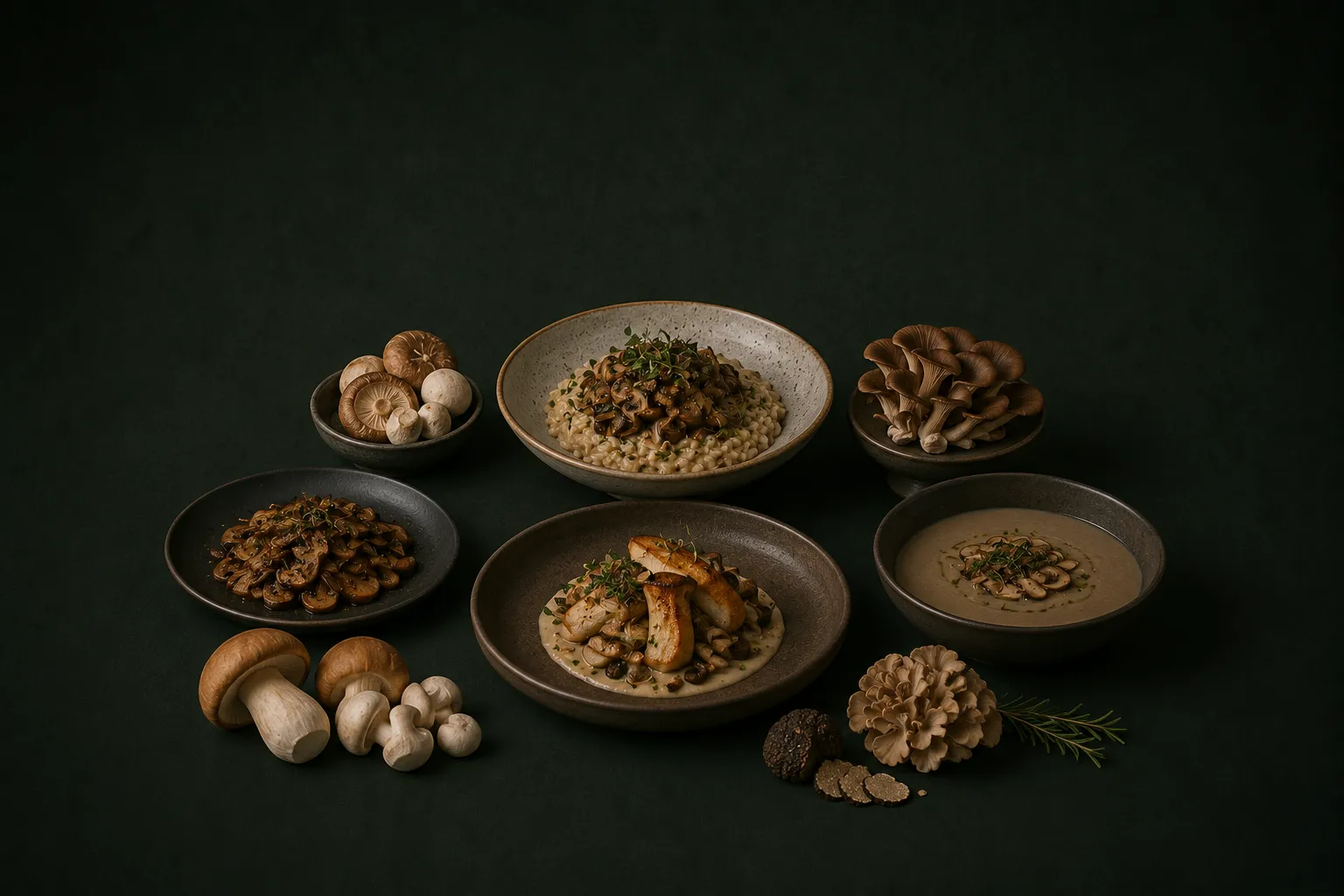
Gourmet mushrooms — Lion’s Mane, Oyster varieties, Shiitake, Reishi, Wine Cap — offer flavors, textures, and culinary experiences that no grocery store can reliably deliver. Home-cultivated mushrooms harvested at peak ripeness taste nothing like what arrives in a plastic clamshell: they’re denser, more fragrant, more complex, and alive with a kind of freshness that disappears within 24 hours of harvest. That’s the secret behind everything we do at Foxfire Mushrooms in Longmont, Colorado — and it’s the reason this recipe collection exists.
Whether you’re here because you just pulled your first flush off a grow kit or because you picked up a beautiful bag of fresh Shiitake at the farmers market, this guide will show you how to cook gourmet mushrooms the right way. That means understanding flavor profiles before you start, learning the few fundamental techniques that unlock the best results, and matching each species to the dish it was born to be in.
For most of history, mushrooms were background characters — sliced, thrown into a pan, and expected to shrink quietly into whatever they were mixed with. That approach underestimates them badly.
Gourmet mushrooms are one of the only ingredients that occupy every flavor lane at once: they contribute umami depth (Shiitake is one of the most glutamate-rich foods on the planet), they add textural complexity that ranges from silky-soft (young Oysters) to satisfyingly meaty (a thick-sliced Lion’s Mane steak), and at high heat, some of them develop flavors — nutty, smoky, sweet — that rival animal proteins for sheer complexity.
They’re also some of the most versatile proteins-adjacent ingredients in the plant-based pantry. Lion’s Mane fools people into thinking they’re eating crab. Pink Oyster mushrooms, hit with high heat, genuinely smell and taste like bacon. Wine Cap mushrooms grilled over charcoal could pass for a good portobello at twice the flavor intensity.
And here’s the thing no cookbook quite says plainly enough: the difference between a mediocre mushroom dish and a transcendent one is almost always technique, not ingredients. A $3 bag of fresh Oyster mushrooms cooked correctly will outperform an overwatered portobello cooked carelessly every single time.
Before you cook anything, know what you’re working with. This table is your cheat sheet.
| Species | Flavor Profile | Texture When Cooked | Best Methods | Avoid |
| Lion’s Mane | Mild, faintly sweet; uncanny seafood/crab-like quality | Pulls into tender strands; dense center stays slightly chewy | High-heat sear; pan-fried cakes; butter-basted steaks | Mushy overcooking; knife-slicing (destroys texture) |
| Blue Oyster | Mild savory, slightly nutty, clean finish | Tender, silky; thin fronds crisp at edges | Sauté, stir-fry, roast, pasta | Soaking in water before cooking — they absorb too much |
| Pink Oyster | Slightly smoky, genuinely bacon-adjacent at high heat | Crisps beautifully at edges; tender at center | High-heat pan; tacos; grain bowls | Low-and-slow heat — they steam instead of sear and lose that smoky edge |
| Shiitake | Deep umami, woodsy, satisfyingly meaty | Firm-chewy caps; chewy stems (use stems for broth only) | Soups, ramen broth, stir-fry, roasting | Eating raw — always cook Shiitake; also avoid eating the stems as-is |
| Reishi | Bitter, woody, intensely medicinal | Extremely tough and woody even when dried | Dried for tea and tinctures only — never for eating | Using as a culinary mushroom in any form |
| Wine Cap | Mild, earthy, meaty depth without bitterness | Versatile; holds shape well; excellent fresh | Grilling, sautéing, braising, raw in salads | Extended drying — doesn’t dehydrate well; best fresh |
| Turkey Tail | Not edible — tough, leathery, no culinary value | Inedibly chewy even after long cooking | Dried for tea or broth only; never as food | Cooking and eating directly |
A few things worth calling out: Reishi and Turkey Tail are not culinary mushrooms. They appear on this chart because people ask about them constantly, and the answer is always the same — dried, simmered, strained. If you want to eat a mushroom for dinner, pick from the top five.
You can learn a dozen mushroom recipes, or you can learn four techniques that make every mushroom recipe better. Here’s what actually matters.
This is the single most important technique in mushroom cookery. Mushrooms are mostly water — anywhere from 85% to 95% by weight depending on species. If you add them to a lukewarm pan with oil, they release that water immediately, the pan temperature drops, and they steam in their own liquid rather than searing. You get grey, rubbery mushrooms. Nobody wants that.
The fix: start with a completely dry, very hot pan — cast iron or stainless steel works best. Get it ripping hot over medium-high to high heat before anything goes in. Add the mushrooms in a single layer without oil, and leave them alone. Let them sear against the hot surface for 2–3 minutes undisturbed. They’ll release their liquid, that liquid will evaporate, and then — right around the time the pan looks dry again — they’ll start browning beautifully on the contact side. That’s the Maillard reaction, and that’s where the flavor lives.
Once you have that golden crust, add your fat (butter, oil, or both) and toss to coat. This approach works for every species on the chart above.
Salt draws moisture out of cell walls through osmosis. If you salt mushrooms at the start of cooking, you’re releasing extra liquid right when you’re trying to drive it off — fighting yourself. The result is even more steaming and less browning.
The better move: hold salt until the mushrooms have developed a crust and most of their moisture has evaporated, then season. You’ll get faster browning and better flavor penetration because the salt goes into a more concentrated, already-seared piece of mushroom rather than a wet one.
Different fats do different things for mushrooms, and matching them matters.
Dried Shiitake mushrooms are one of the most underrated pantry ingredients available. Rehydrating them correctly turns the soaking liquid into one of the most umami-rich broths you can make with zero effort.
The technique: submerge dried mushrooms in warm (not hot) water and let them soak for at least 30 minutes. Cold water overnight in the fridge works even better — slower extraction pulls more flavor into the liquid. When they’re soft, lift them out gently (don’t squeeze hard — you’ll cloud the liquid with grit), trim the stems, and use the caps as usual. Strain the soaking liquid through a fine-mesh strainer or cheesecloth and use it as broth, soup base, or sauce liquid. That liquid is pure concentrated glutamate — it makes everything it touches taste better.
Here’s everything in the Foxfire Mushroom recipe library. Each one was developed with a specific species and specific technique in mind — not just “add mushrooms to a thing.”
Lion’s Mane “Crab Cakes” — The most convincing plant-based seafood dish in the mushroom world. Hand-shredded Lion’s Mane, dry-seared and formed into golden pan-fried cakes with Old Bay and lemon. People regularly do double-takes.
Shiitake Mushroom Ramen From Scratch — A deeply umami broth built from rehydrated dried Shiitake and optional kombu, finished with fresh sautéed Shiitake caps for texture. Rich, warming, and genuinely better than most restaurant versions.
Pink Oyster Mushroom Tacos — High-heat Pink Oyster with that characteristic smoky-bacon edge, piled into warm tortillas with quick pickled onion and avocado crema. One of those recipes that converts skeptics on the first bite.
Blue Oyster Mushroom Stir-Fry — Fast, weeknight-friendly, and a master class in high-heat cooking. Blue Oyster mushrooms with garlic, ginger, soy, and a hit of sesame over rice or noodles.
Reishi Mushroom Tea & Golden Milk (3 Recipes) — Reishi isn’t for eating — it’s for sipping. Three preparations: simple simmered reishi tea, ginger-honey reishi tea, and a creamy reishi golden milk that works as a nightly ritual.
More recipes are on the way. We add to this collection as new species come into season and new ideas prove themselves in the kitchen. Browse the full recipe archive to stay current.
There is a real, noticeable flavor difference between a mushroom you grew yourself and one that traveled three states in a refrigerated truck. This isn’t marketing — it’s basic biology.
Mushrooms begin to degrade the moment they’re harvested. Flavor compounds volatilize, cell walls soften, and that bright, clean fragrance that fills the room when you pull a fresh flush starts fading within hours. Commercially grown mushrooms are typically harvested 24–72 hours before they reach you, sometimes longer. By the time you sear them, some of that peak freshness is already gone.
When you grow your own with a Foxfire Grow Kit, you harvest exactly when the mushrooms are ready — caps fully open for Oysters, clusters firm and white for Lion’s Mane — and you cook them the same day. The difference in the pan is immediate: more aroma, faster browning, more concentrated flavor, better texture.
Grow kits aren’t just a novelty. For a serious home cook, they’re the closest thing to the chef’s advantage of sourcing directly from a farm. You know when it was harvested because you were the one who did it.
Our beginner’s guide to growing mushrooms is the right place to start if you’re new to cultivation. The grow kit buyer’s guide will help you pick the right kit for your kitchen setup.
Mushrooms are one of the most wine-friendly ingredients in the kitchen because umami amplifies everything around it. Here’s a quick pairing framework that works.
With earthy species (Shiitake, Wine Cap): Reach for Pinot Noir, Burgundy, or aged Nebbiolo — wines with earthiness and red fruit that rhyme with the mushroom’s profile rather than fighting it. For white wine drinkers, a textured Chardonnay or white Burgundy works beautifully.
With delicate species (Blue Oyster, Lion’s Mane): Lighter wines do better here — unoaked Chardonnay, Vermentino, or a dry Riesling. You want brightness and minerality, not tannins that overwhelm the mushroom’s subtlety.
With grains: Mushrooms and whole grains are one of the great natural pairings. Shiitake over farro, Blue Oyster sautéed into barley risotto, Wine Cap tossed with wild rice — the earthy, chewy quality of whole grains extends and complements mushroom texture rather than burying it under starch.
With proteins: Mushrooms alongside animal protein function as a flavor amplifier and textural counterpoint. A small amount of sautéed Shiitake alongside chicken thighs, or Blue Oyster folded into a pork ragu — the mushroom’s glutamates make the meat taste more like itself.
With cheese: Aged hard cheeses (Parmesan, Pecorino, aged Gruyère) and mushrooms share glutamate intensity — stacking them creates that deeply satisfying savory hit you find in the best pasta dishes. Fresh soft cheeses (chèvre, ricotta) work differently, providing cool creaminess that balances high-heat mushroom bitterness.
Every recipe in this collection gets better when you start with mushrooms at peak freshness. A Foxfire Grow Kit puts that freshness in your hands — no farm access, no farmers market schedule, no guessing when it was harvested.
Our kits are made in Longmont, Colorado, inoculated with high-quality grain spawn, and backed by a 30-day guarantee. Whether you want Lion’s Mane for crab cakes or Shiitake for ramen broth, we have the kit that fits your kitchen.
Not sure where to start? The beginner’s guide to growing mushrooms walks through everything from kit setup to first harvest. The grow kit buyer’s guide helps you pick the right species for your cooking style.
Blue Oyster mushrooms are the most forgiving for beginners. They’re mild, they cook quickly (5–7 minutes in a hot pan), they don’t require any special prep, and they pair well with almost everything. If you want something a little more dramatic for a first impression, Lion’s Mane is worth the extra attention — the texture transformation is genuinely surprising.
Yes and no. Mushrooms can replace meat functionally (they add umami, bulk, and texture) and satisfyingly in most preparations. A Lion’s Mane “crab cake,” a Shiitake mushroom ramen, or a Pink Oyster taco can fully stand on its own without any animal protein. What mushrooms don’t do is provide the same protein-per-calorie ratio as meat, so if you’re thinking nutritionally, plan your plate accordingly. Culinarily? The swap is excellent.
Paper bag in the refrigerator, not plastic. Plastic traps moisture and accelerates decay. A brown paper bag absorbs excess moisture and lets the mushrooms breathe. Most fresh gourmet mushrooms will hold well for 5–7 days this way — though like all produce, the sooner you cook them, the better they’ll taste. Never wash mushrooms until right before cooking; dampness in storage speeds breakdown dramatically.
You can, but raw frozen mushrooms turn mushy after thawing because their high water content ruptures cell walls during freezing. The better approach: sauté them first in a hot pan until most of their moisture is gone and they’re nicely golden, then freeze in a single layer on a sheet pan and transfer to a bag. Frozen this way, they’ll reheat well in soups, stews, and sauces — not ideal for a seared preparation, but perfectly fine as an ingredient.
Dried Shiitake mushrooms, no contest. Shiitake contain exceptionally high levels of guanylic acid (GMP), a nucleotide that amplifies umami perception dramatically — especially when combined with the glutamates in kombu. Soak dried Shiitake in cold water overnight, then use that soaking liquid as your broth base. It’s deeply savory, completely plant-based, and costs almost nothing to make.
Avoid the microwave — it steams them and destroys the texture you worked to create. Instead, reheat in a dry skillet over medium-high heat for 2–3 minutes, tossing occasionally, until they’re warmed through and the surface crisps up again. A little fresh butter or oil in the pan helps. This method revives the sear and brings back the texture almost entirely. The only thing you can’t fully recover is the very first bloom of aroma from fresh-cooked mushrooms, but the flavor will still be there.
Share this article
Grab a beginner-friendly kit and apply what you just read —
or take the quiz and we’ll match you to the right
starting point.
