

- Scott Brenton
- 10 min read
A walk along Left Hand Creek in Longmont, Colorado, one October evening turned up an unexpected sight: a faint green glow coming off a rotting
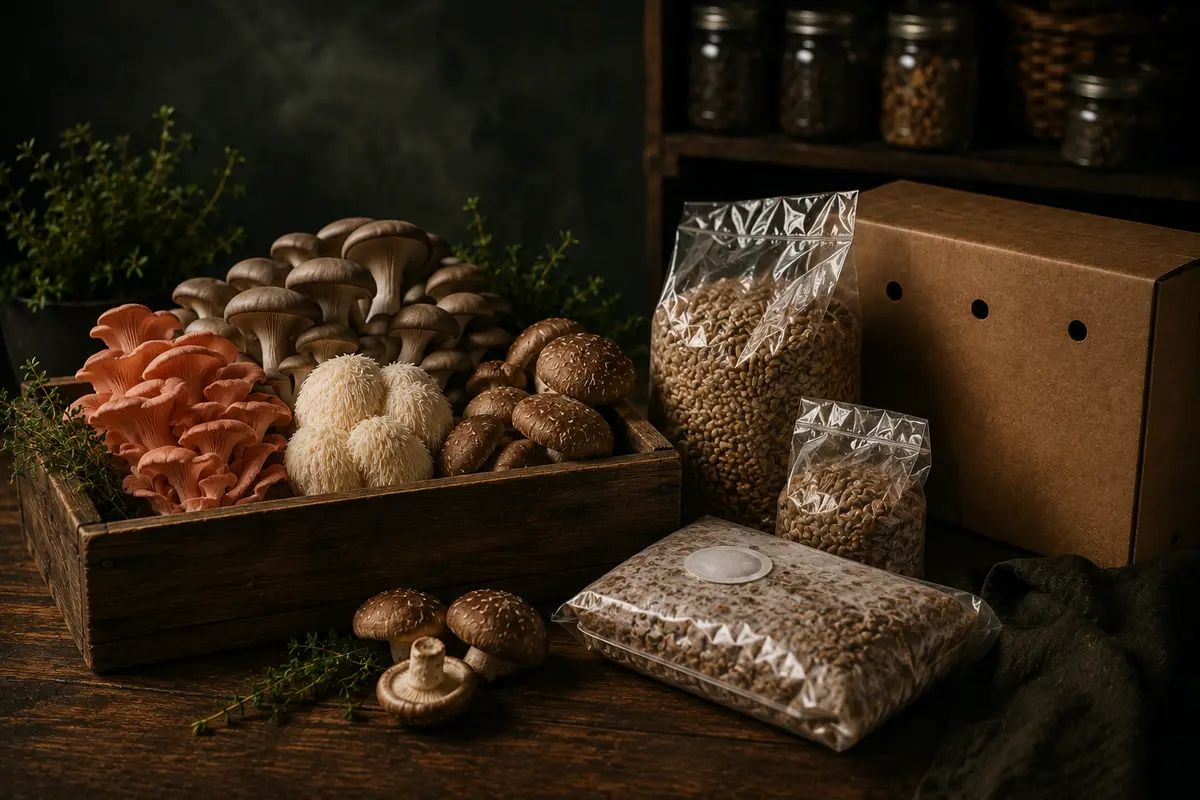
Restaurant owners, small farms, and shop buyers researching wholesale mushrooms Colorado sourcing usually land on the same question after scrolling past the marketing page: what does a wholesale account actually cost, and how does the ordering process really work. With Foxfire Mushrooms in Longmont, a wholesale account means volume pricing that scales with order size, a reserved production slot, and a dedicated contact instead of a support ticket queue, all set up through a short application that the Longmont team typically answers within two business days.
Quick Facts — Focus region: Front Range, Colorado – Typical order lead time: 24 to 48 hours – Common wholesale minimum: none required for most small farms – Harvest to delivery window: same day or next day – Free shipping threshold on retail orders: $75 – Species commonly available: Blue Oyster, Pink Oyster, Lion’s Mane, Shiitake
A wholesale account is not a discount code bolted onto the regular shop. It restructures how the relationship works. Instead of placing one off orders through the retail site, a wholesale partner gets a reserved production slot, meaning Foxfire plans a portion of each week’s grow around what that account needs. Gourmet mushrooms and fresh spawn are living products with their own timelines, so a restaurant that has to reorder oyster mushrooms every Thursday for a weekend menu cannot afford to find out on Wednesday that the batch sold out to someone else.
Along with the reserved slot, accounts get volume pricing, net terms once established, and a single point of contact rather than a general inbox, which for farms buying bulk spawn is often the difference between a smooth reorder and a scramble.
As a wholesale mushroom supplier, Longmont based Foxfire builds pricing around three volume tiers rather than one flat rate. Accounts ordering in the 50 to 100 unit range, the 100 to 250 unit range, and the 250 plus range each see pricing that improves as volume goes up, with typical savings landing around 15 percent or more off retail list pricing depending on the product line and order size. A unit here usually means a single grow kit, a bag of colonized grain spawn, or a comparable packaged item rather than a pound or a case, so the actual dollar volume varies by product mix. This tiered approach to bulk mushroom spawn pricing is common across Colorado suppliers, though the exact percentages differ from one lab to the next.
Net terms on a wholesale account only become available once an order history exists, since a small operation still has to manage its own cash flow around lab supplies and packaging before extending credit makes sense. New accounts should expect to pay up front for the first order or two.
Buying mushrooms wholesale in Colorado does not benefit every business equally. A business ordering ten or fifteen units a month will not see much from a tier built around 50 units and up, and the retail shop, where every order over 75 dollars ships free, is usually the better fit until order size grows into the first bracket.
The application on the wholesale page asks for business name, business type, website or social media presence, and an estimated monthly order volume bracket. The business type options currently listed are wellness store, online retailer, event vendor, vape shop, and other, which means a restaurant or a farm applying should select other and use the message field to describe the actual business, since the form was not built with a single dropdown for every buyer type. Foxfire’s team reviews each application and typically responds within two business days, so a restaurant planning to open in three weeks should apply well before the last minute.
Once approved, the account gets a dedicated contact to work out product mix, delivery cadence, and the first standing order for mushrooms or supplies. A reserved production slot means the account is not competing with retail customers for the same batch of grain spawn or the same morning harvest, and repeat orders move through the same 48 hour turnaround rather than starting from scratch every time. Anyone who wants to talk through the details before applying can also call or email Foxfire directly rather than waiting on the form.
Three types of buyers make up most wholesale relationships with Colorado mushroom suppliers, and each uses the program differently.
| Buyer Type | What They Typically Order | Delivery Pattern |
| Restaurants and chefs | Fresh gourmet mushrooms harvested the morning of delivery, plus Front Range chef boxes | Standing weekly orders, Front Range delivery |
| Farms and cultivators | Bulk colonized grain spawn, sterilized grain, substrate | Scheduled bulk shipments at volume pricing |
| Retailers and markets | Grow kits, Brain Bears gummies, Harmonic Honey | Restock orders on a set cadence with wholesale margin |
Restaurants tend to care most about freshness and reliability, since a chef building a menu around oyster mushrooms cannot substitute something else at the last minute. Farms and cultivators usually chase price per unit at volume, since margin matters more than convenience once they are colonizing at scale. Retailers sit in between, wanting a workable wholesale margin and a restock cadence that keeps shelves full without overordering perishable stock.
Here is a detail most competitor posts about wholesale mushroom sourcing in Colorado will not mention, because it only shows up if you operate a lab at altitude. Foxfire’s facility sits at nearly five thousand feet in Longmont, dealing with low humidity, intense UV, and wide daily temperature swings that most cultivation guides do not account for. Every batch of colonized grain spawn is grown and tested in those exact conditions rather than in a climate controlled facility somewhere at sea level, so the spawn a wholesale farm account receives has been observed colonizing and fruiting under conditions closer to what a lot of Colorado growers deal with at home, rather than only under ideal lab settings.
That is not a universal advantage. A wholesale buyer in a humid coastal state would not see the same benefit, and Foxfire’s fresh mushroom delivery is limited to the Front Range, not nationwide, which rules the wholesale fresh harvest option out for restaurants outside that corridor. Cultivation supplies like spawn and substrate do ship further, but the same day harvest arrangement that restaurants value is a local option only.
Contamination testing standards vary more than most buyers assume across Colorado’s wholesale mushroom suppliers. Foxfire tests every production lot before it leaves the lab, and a wholesale account buys into that same standard rather than a separate, lower bar reserved for bulk orders. For a farm reselling spawn, or a restaurant that cannot afford a bad flush on a busy weekend, that consistency matters as much as the price.
A business applying for the first time benefits from having a rough sense of its real order volume before filling out the form, since the estimated monthly volume bracket shapes which pricing tier a new account starts in. It also helps to know which product lines fit the business, since a retailer stocking shelves does not need the same conversation as a restaurant needing a weekly harvest. Being specific about that in the message field speeds up the two business day response window rather than slowing it down with back and forth questions.
Farms and cultivators buying grain spawn in bulk should also think about delivery cadence before the first order goes in, since a standing order set up too aggressively can leave an operation sitting on more colonized spawn than it can use before it starts pinning on its own.
Anyone comparing wholesale mushroom suppliers in Colorado should ask directly how contamination gets tested and how a bad batch is handled, since that rarely shows up on a pricing page but matters once a standing order is running week after week. A supplier that grows and tests its own spawn on site, the way Foxfire does in Longmont, can usually answer that in specifics rather than general reassurance.
A wholesale relationship with Foxfire starts with the short application on the wholesale page, where a business shares its name, type, and rough monthly volume. From there, the Longmont team reaches out within two business days to work out product mix, delivery cadence, and the first standing order. Restaurants looking for a reliable morning harvest, farms chasing better spawn pricing at volume, and retailers wanting Brain Bears gummies or grow kits on the shelf all start in the same place. Apply for a wholesale account through the Foxfire Mushrooms wholesale page, or call (517) 881 3758 or email su*****@**************ms.com first with any questions about fit before submitting the form.
Savings typically run around 15 percent or more off retail list pricing, depending on the product line and which volume tier an order falls into.
Foxfire’s application uses three volume brackets, starting at 50 to 100 units per month, so there is no single fixed minimum, but accounts ordering below that range are usually better served by the regular retail shop.
Foxfire’s team typically responds to wholesale applications within two business days, though a business planning a launch date should apply earlier rather than waiting until the last minute.
No. Fresh gourmet mushroom delivery is limited to the Front Range in Colorado, since the mushrooms are harvested the morning of delivery and do not ship nationwide. Cultivation supplies like spawn and substrate do ship further.
Retailers and markets typically stock grow kits, Brain Bears Lion’s Mane gummies, and Harmonic Honey, all with wholesale margins and a restock cadence set up during onboarding.
Net terms become available for established accounts with an order history. New accounts should expect to pay up front for the first order or two before net terms are set up.
Wholesale grain spawn comes with volume pricing, a reserved production slot so supply is not competing with retail customers, and a 48 hour standing order turnaround, while retail orders are priced individually with no reserved production capacity.
Share this article
A walk along Left Hand Creek in Longmont, Colorado, one October evening turned up an unexpected sight: a faint green glow coming off a rotting

A pound of fresh Lion’s Mane can lose quality quickly when it sits unrefrigerated, going soft and faintly sour within a day, which is why

A countertop covered in mushrooms after a strong flush is a familiar problem for home growers, and the question that follows just as fast is
Grab a beginner-friendly kit and apply what you just read —
or start with our beginner’s guide to find the right first grow.