

- Scott Brenton
- 10 min read
A walk along Left Hand Creek in Longmont, Colorado, one October evening turned up an unexpected sight: a faint green glow coming off a rotting
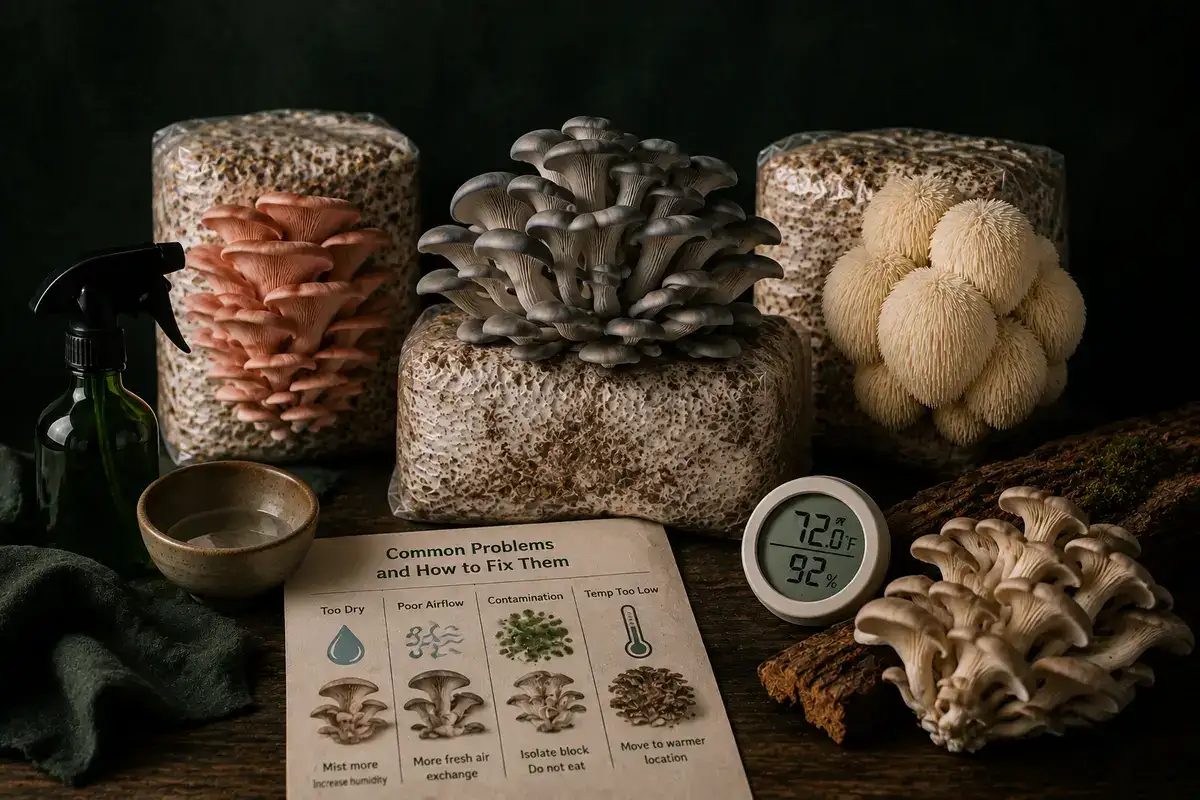
The first time a grow bag sat untouched on the kitchen counter for eleven days with nothing but a faint dusting of white fuzz, it felt like something had gone wrong. That fuzz turned out to be normal mycelium recovering from shipping stress, not trouble, and it is the same worry Foxfire Mushrooms hears about often from first time growers. Most common mushroom growing problems come down to a handful of causes: not enough humidity, not enough fresh air exchange, temperature swings, or contamination that got in before the block ever left the lab. Once a grower can tell those apart, fixing them stops being guesswork.
Quick Facts — Most common issue: low humidity – Ideal fruiting humidity: often 85 to 95 percent, varies by species – Typical time to first pins: 7 to 14 days – Typical fruiting temperature: species dependent, many common gourmet kits perform well around 65 to 75 degrees Fahrenheit – Foxfire live arrival guarantee: covers damaged or contaminated blocks on arrival
This is the most common mushroom grow kit troubleshooting question reaching the Foxfire support inbox. In most cases nothing is wrong. Fully colonized blocks need a short rest period after shipping before they start pinning, and that window commonly runs anywhere from a few days to two full weeks depending on the species. Lion’s Mane tends to be quick, often showing the first small white knots within a week. Shiitake can be slower, sometimes sitting quietly for two weeks before doing anything visible.
Two useful signs to check are smell and texture. A healthy, resting block usually smells faintly earthy or mushroomy and feels firm when pressed. A block in real trouble usually smells sour, sharp, or like standing water, and that smell shows up long before any visible mold does.
Pinning failure and pins that abort partway through are two different problems that get lumped together constantly. Pinning failure means the mycelium never forms the small pin shaped knots that turn into mushrooms at all. Pins shriveling before they open into a full mushroom is a separate issue, where the early growth does start but then stalls out.
Inadequate fresh air exchange is one common cause of delayed or poor pinning, although humidity, temperature, species, and block condition can also play a role. Good fresh air exchange helps prevent carbon dioxide from building up around the fruiting block, and inadequate airflow can contribute to poor pinning or elongated growth in many gourmet mushrooms. A grow kit left inside a sealed tote or a stuffy closet without airflow will often colonize well and then just sit there, waiting for a change in air exchange that never comes. Pins that shrivel or stall are more often a humidity or temperature swing issue, where a sudden dry spell or a cold night causes early growth to abort rather than push through. A grower who mists twice a day and then lets the block dry out for several days is creating the kind of inconsistent moisture that can contribute to stalled pins.
Throwing out a block too early is one of the most common mistakes here, often before contamination is even confirmed. Healthy mycelium is white, sometimes slightly off white or cream colored, and it grows in a fluffy or rope like pattern across the substrate. If what you are looking at does not match that pattern, most often showing up green, black, pink, or a wet looking orange, that is the signal to look closer rather than assume the worst right away.
Green mold contamination is commonly linked to Trichoderma species and tends to appear as small green dots that spread outward in rings rather than staying in one spot. Black contamination often shows up as pinpoint dots that look like pepper flakes scattered across the surface. Pink or orange patches that look slimy rather than fuzzy are generally associated with bacterial rather than fungal growth, and tend to come with a distinctly unpleasant smell.
Every colonized block Foxfire ships goes through a visual contamination check in the Longmont lab before packaging, and any block showing early signs gets pulled rather than shipped. The live arrival guarantee covers blocks that arrive damaged or contaminated, so it is worth documenting and reaching out early if something looks off right after opening the box.
| Situation | Usually Fixable | Usually Means Starting Over |
| Slow to pin, no smell issues | Yes, adjust humidity and airflow | No |
| Small green dots, contained to one spot, caught early | Sometimes, isolate and contact the supplier | Often, if it spreads |
| Sour or ammonia smell from the block | No | Yes |
| Pins forming then shriveling | Yes, stabilize humidity and temperature | No |
| Black pepper like dots spreading across surface | Rarely | Yes |
| Mushrooms growing but caps staying small and thin | Yes, usually a humidity or light issue | No |
Most home growers do not need a full fruiting chamber to get good results, though it helps for anyone growing several kits at once. A simple setup involves misting the inside of the bag or tent two to three times a day with plain water, propping the bag open slightly rather than sealing it completely, and keeping the block somewhere with indirect light and steady room temperature. Many gourmet mushroom kits fruit well at high relative humidity, often around 85 to 95 percent, although the ideal range varies by species and growing setup. The more overlooked piece is fresh air exchange, since a humid but sealed environment builds up carbon dioxide, which is commonly linked to long, thin, leggy mushrooms rather than short, dense ones. A small hygrometer placed near the grow kit takes the guesswork out of this, since humidity is easy to overestimate or underestimate by feel alone.
An easy home fix that a lot of Foxfire customers land on eventually is a clear tote with several small holes drilled around the sides, which holds humidity far better than an open room while still allowing enough airflow to prevent that leggy stretched look. It is not glamorous, but if your mushrooms keep coming out stretched and thin no matter how often you mist, this is usually the fix that works, more reliably than a fancier setup used inconsistently.
Small, pale, or oddly shaped mushrooms are almost never a sign of contamination on their own. Thin, long stemmed mushrooms with tiny caps usually point to too much carbon dioxide and not enough fresh air, the same leggy growth problem already mentioned. Pale or washed out caps often point to too little indirect light, since most gourmet mushroom species are generally understood to not need direct sun but do need enough ambient light to develop normal coloring. Mushrooms that curve toward one side of the bag are typically just growing toward the nearest light source or air gap, which is cosmetic and does not affect edibility.
If your first flush looks smaller or less even than the photos on a product page, that is not a sign the kit is defective. A first flush can sometimes be smaller or less uniform while a block is adjusting to its fruiting conditions, but flush size varies by species, block, and growing environment, and giving up after an unimpressive first flush can mean missing a better second one.
Sometimes, and honestly not always. A block that is simply slow, dry, or under aerated can usually be brought back with a few days of consistent misting and better airflow. A block with a sour smell, visible slime, or contamination spread across more than a small isolated patch is not worth trying to save, both for food safety reasons and because the spent substrate can often be composted instead. Catching the right category early makes the difference, and Foxfire’s grower consultations exist for exactly this situation, walking a customer through photos and smell descriptions to figure out whether a struggling kit just needs a few adjustments or is genuinely done.
Anyone staring at a grow bag right now trying to decide whether it is resting or actually in trouble does not have to guess alone. Foxfire offers grower consultations for exactly this kind of situation, and every grow kit ships with the live arrival guarantee built in. Shop the current lineup of grow kits at foxfiremushrooms.com, or reach out to book a consultation before writing off a block that might just need a few more days.
Most kits need a rest period after shipping before pins appear, ranging from several days up to two weeks depending on the species. As long as the block still smells earthy and feels firm, it is usually just adjusting.
Contamination typically shows up as a distinct color that does not match the fluffy white mycelium pattern, most often green, black, or slimy pink patches, often paired with a sour or unpleasant smell.
Any mushrooms growing from a visibly contaminated block should not be eaten. If you see visible mold or other suspected contamination, isolate the block and contact the supplier for guidance rather than trying to work around it.
This leggy appearance is commonly linked to not enough fresh air exchange, since a buildup of carbon dioxide inside a sealed container is widely associated with longer, thinner stems.
Many gourmet mushroom kits fruit well at high relative humidity, often around 85 to 95 percent, although the ideal range varies by species and growing setup. Regular misting combined with enough airflow to prevent stagnant, overly wet conditions is the general approach most kits respond to.
Pins that stall out this way usually follow a sudden drop in humidity or a temperature swing right after pinning begins, so consistency in misting and room temperature matters more once pins appear.
A first flush can sometimes be smaller or less uniform while a block is adjusting to its fruiting conditions, but flush size varies by species, block, and growing environment, so this alone does not indicate a problem.
Share this article
A walk along Left Hand Creek in Longmont, Colorado, one October evening turned up an unexpected sight: a faint green glow coming off a rotting

A pound of fresh Lion’s Mane can lose quality quickly when it sits unrefrigerated, going soft and faintly sour within a day, which is why

A countertop covered in mushrooms after a strong flush is a familiar problem for home growers, and the question that follows just as fast is
Grab a beginner-friendly kit and apply what you just read —
or start with our beginner’s guide to find the right first grow.