

- Scott Brenton
- 10 min read
A walk along Left Hand Creek in Longmont, Colorado, one October evening turned up an unexpected sight: a faint green glow coming off a rotting
I had two bottles of Lion’s Mane capsules sitting on my kitchen counter last winter, one from a supplier I couldn’t place and one that came from a lab I’d actually visited. I picked up the mystery bottle and read the label three times looking for a country of origin, a harvest date, anything. There was nothing.
That gap is exactly why Colorado grown mushroom supplements have become the safer bet for people who actually want to know what they’re taking. When a product is grown, extracted, and packaged somewhere you can point to on a map, like Foxfire Mushrooms does in Longmont, you get a paper trail instead of a guess.
Quick Facts — Founded: 2021 in Longmont, Colorado – Verified customers: 1,200+ – Brain Bears dose: 600 mg Lion’s Mane per serving – Extraction type: whole fruit, dual extracted – Free shipping: on orders over $75 – Testing: every culture and batch checked in house before it ships
Traceability means you can follow a product backward from your kitchen counter to the exact place it was grown. The species and strain, whether it came from mycelium or the actual fruiting body, where it was cultivated, and who checked it before it shipped, all of that is part of the chain. Most labels skip nearly all of it. They’ll print “Lion’s Mane mushroom extract” next to a milligram number and stop there.
Spotting traceable mushroom supplements usually starts with one simple check: flip the bottle over and look for a batch or lot number near the expiration date. If it has one, you can email the company and ask which harvest or culture that batch came from. No batch code at all is often the first sign the product was blended from multiple unknown sources before bottling.
At Foxfire, that chain stays short because it never leaves the building. The mushrooms behind Brain Bears are grown from strains cultivated at the Longmont lab, not bought as biomass from a broker who blended material from three different countries. When something goes into a Foxfire product, someone on the team can point to the specific flush it came from, not just a general region or supplier name.
Growing conditions shape what ends up in the final product. Humidity, substrate quality, contamination control, even the water source, all affect potency and safety. A fruiting body grown in a controlled Colorado facility on tested substrate is a known quantity. A shipment of dried mushroom material imported in bulk from an unregulated grower is not, no matter how clean the label design looks.
Mycelium versus fruiting body is where a lot of shoppers get misled. Some cheaper supplements are made almost entirely from mycelium grown on grain, which means a meaningful chunk of what’s in the capsule is leftover starch from the grain itself rather than concentrated mushroom compounds. Fruiting body extract, meaning the actual cap and stem, is where the beta glucans and hericenones people take Lion’s Mane for are concentrated. A label listing the species by its Latin name, Hericium erinaceus, alongside the part used is a good sign the company knows exactly what went into the formula.
Imported supplements aren’t automatically low quality, but the supply chain behind them usually runs through more hands: farm, regional processor, exporter, importer, private label bottler, then retailer. By the time the product reaches a shelf, nobody along that chain can say with confidence which strain was used or how the drying was handled, and drying speed affects potency more than most labels ever mention.
Small batch producers cut most of that chain out. Foxfire grows, dries, extracts, and bottles within one operation in Longmont, so there are fewer hands the product passes through and fewer places for something to go unrecorded.
| Factor | Colorado grown, small batch (Foxfire) | Typical imported bulk supplement |
| Sourcing transparency | Grower and lab are the same team | Often unknown past a broker |
| Extraction base | Whole fruit, dual extracted | Frequently mycelium on grain filler |
| Testing | In house contamination and quality checks before shipping | Varies widely, often unverified |
| Shipping time to US customer | Days, ships from Longmont | Weeks, crosses multiple borders |
| Batch consistency | Small runs, closely monitored | Large blended lots from multiple sources |
Brain Bears use whole fruit, dual extracted Lion’s Mane at 600 mg per serving, and this is one part of Lion’s Mane supplement sourcing where Foxfire is specific rather than vague. Dual extraction means the mushroom passes through both a hot water extraction and an alcohol extraction, since some of the compounds people want are water soluble and others only come out with alcohol.
In practice, that’s one gummy a day, and a 30 count bottle lasts a month at that pace, which works out to roughly $1.17 a day at full price. Lion’s Mane is typically taken consistently rather than as needed, so most people notice more from staying on it for several weeks than from any single dose.
I’ll admit the gummies themselves aren’t for everyone on first taste. They lean earthy and mushroom forward rather than candy sweet, and a few Foxfire customers have mentioned wanting water nearby the first time they try them. That’s a small tradeoff for a product that isn’t hiding behind flavoring to cover for what’s actually inside it.
The mushroom part used is the first tell, fruiting body or mycelium, since a label that never mentions which one is usually avoiding the question. The extraction method matters too, because “dual extraction” or “hot water extraction” tells you something specific, while the word “extract” alone tells you almost nothing.
Many serious labels also print an extraction ratio, something like 8 to 1 or 10 to 1, showing how much raw mushroom went into that concentration. No ratio, no extraction method, and no mention of fruiting body or mycelium usually means three missing pieces at once, not one small gap.
Not necessarily. There are careful overseas growers doing solid work, and there are sloppy domestic operations too, so origin alone isn’t a quality guarantee. What matters more, whether you’re comparing imported brands or domestic mushroom supplements, is whether a company can actually document its process.
That’s easier for a small, Colorado based operation, where documentation comes naturally when the whole thing fits inside one building instead of spreading across three countries and a handful of middlemen.
Every culture used at the Longmont lab gets checked visually and under controlled incubation for signs of contamination before it’s used to inoculate grain or substrate. Anything showing an unexpected color, smell, or growth pattern gets pulled rather than used. For finished wellness products like Brain Bears and Harmonic Honey, the team tracks each production run back to the specific mushroom batch it came from, so if a customer asks about a particular order, there’s an actual record to check instead of a guess. Wholesale partners buying fresh harvests expect the same level of tracking.
This kind of batch level tracking is what real mushroom supplement testing looks like day to day, not just a claim on a website. Tracing one bottle of gummies back to the exact grow it came from is the standard Foxfire holds itself to internally, whether or not it shows up in the copy.
Whole fruit, dual extracted mushroom material costs more to produce than mycelium grown on grain, and small batch production doesn’t get the economies of scale a massive overseas facility does. Brain Bears run $34.99 for a 30 count bottle, more than the cheapest imported gummies online. The tradeoff is knowing what’s actually in the bottle, and for people who prioritize functional mushroom quality over a lower price tag, that tradeoff usually holds up.
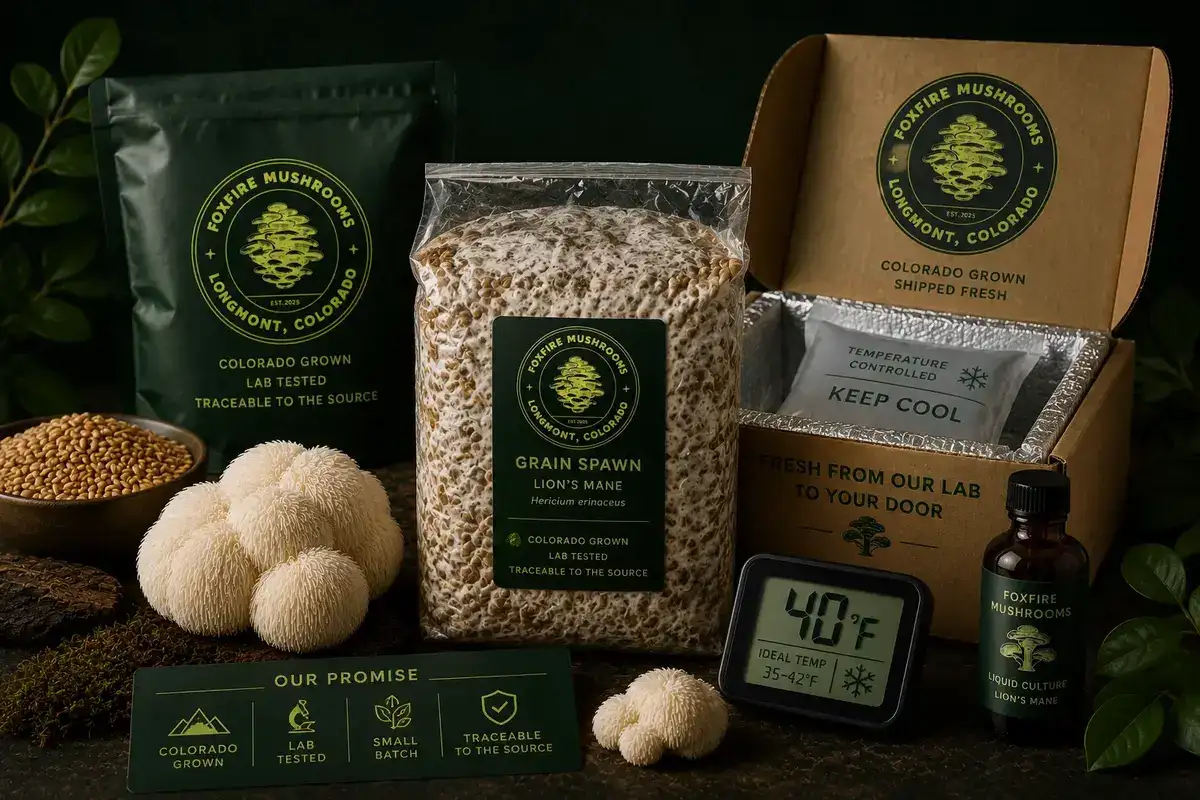
Traceability isn’t only a supplement question. It applies just as much to grain spawn and liquid culture, where a contaminated culture can wreck weeks of a grower’s work. That’s why Foxfire tests every culture in house instead of buying in bulk and repackaging it.
If you’ve been taking a mushroom supplement without knowing where it actually came from, it’s worth trying one you can trace all the way back to the grow. Pick up a bottle of Brain Bears or a jar of Harmonic Honey and compare it to whatever’s currently in your cabinet, or reach out for a grower consultation if you’re curious about starting your own cultures at home. Either way, you’ll actually know where it came from, down to the flush.
Not automatically. A shorter, more visible supply chain generally makes it easier to verify quality and catch problems early, but the real marker is documentation and testing, not location by itself.
Mycelium is the root like network the mushroom grows from, often cultivated on grain, while the fruiting body is the actual cap and stem. Fruiting body extracts generally carry higher concentrations of the compounds people are actually taking mushroom supplements for.
No. Lion’s Mane is a non psychoactive functional mushroom, and Brain Bears are formulated for daily use rather than any kind of intoxicating effect.
Each serving contains 600 mg of whole fruit, dual extracted Lion’s Mane.
Yes. Foxfire ships nationwide from the Longmont facility, and orders over $75 qualify for free shipping.
Yes. The team can be reached through the contact page or by phone, and questions about sourcing or testing for a specific product are welcome.
It serves a real purpose. Dual extraction pulls both water soluble and alcohol soluble compounds from the mushroom, which a single method extraction leaves behind, and it costs more to produce, which is part of why not every brand bothers with it.
Share this article
A walk along Left Hand Creek in Longmont, Colorado, one October evening turned up an unexpected sight: a faint green glow coming off a rotting

A pound of fresh Lion’s Mane can lose quality quickly when it sits unrefrigerated, going soft and faintly sour within a day, which is why

A countertop covered in mushrooms after a strong flush is a familiar problem for home growers, and the question that follows just as fast is
Grab a beginner-friendly kit and apply what you just read —
or start with our beginner’s guide to find the right first grow.