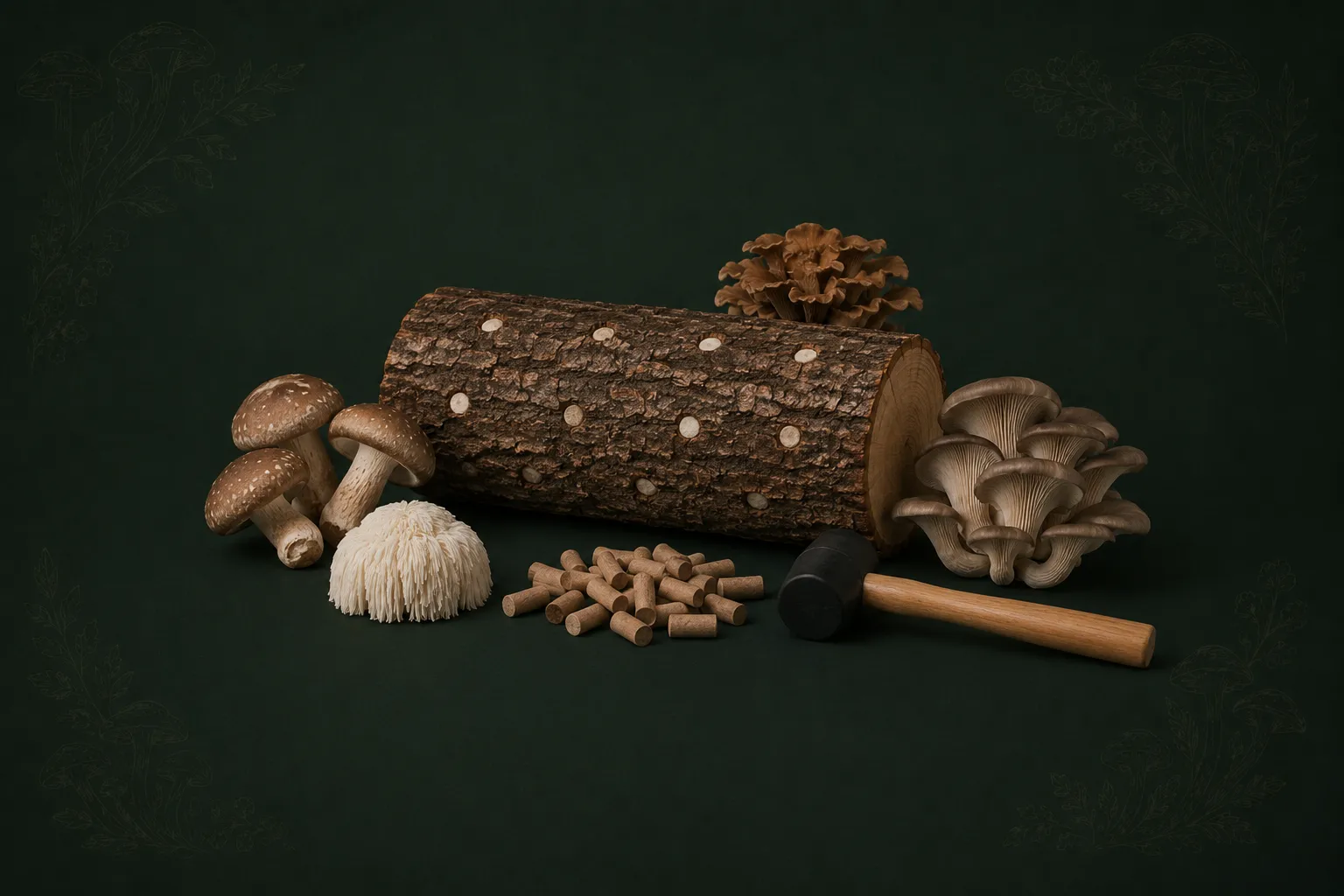
Plug spawn consists of wooden dowels pre-colonized with mushroom mycelium that are hammered into drilled holes in freshly cut hardwood logs to establish an outdoor fruiting setup — one that can produce mushrooms for years with minimal ongoing effort. At Foxfire Mushrooms in Longmont, Colorado, we carry 100-count bags of plug spawn in six species: Shiitake, Wine Cap, Blue Oyster, Lion’s Mane, Reishi, and Chicken of the Woods. Each species has different log preferences, fruiting timelines, and suitability for Colorado’s climate. This guide walks you through all of it so you can choose the right species and get your logs started the right way.
Plug spawn are wooden dowels — typically about 1 inch long and 5/16 inch in diameter — that have been fully colonized with mushroom mycelium and stored cold to keep the mycelium dormant until you’re ready to use them. The process is simple in concept: you drill holes in a fresh hardwood log, tap in the plugs, seal the holes with melted cheese wax, and then let nature take over.
Inside the log, the mycelium from each plug spreads outward through the wood, slowly colonizing the entire log over months to years. Once colonization is complete, the log begins producing mushrooms — typically triggered by rain, temperature changes, or for some species, a deliberate “shocking” soak in cool water. A well-inoculated log from quality plug spawn can produce multiple flushes per year for anywhere from 4 to 10 years, depending on species.
It’s one of the most low-tech, low-maintenance growing methods available, and it produces some of the most spectacular results.
Indoor cultivation is fantastic for speed and control, but outdoor log growing has advantages that no fruiting chamber can match:
For a broader look at the full range of growing methods available, see our beginner’s guide to growing mushrooms.
The quality of your logs directly affects the success of your grow. Here’s what to look for:
Where to source in Colorado: Arborists, local tree services, and lumber mills often have logs available cheaply or free — especially after storm cleanup. Ask specifically for oak, maple, or alder if you can. Avoid conifers (pine, spruce, fir) for all species except some specialty applications — resinous wood is generally unsuitable for gourmet mushroom production.
| Species | Wait to First Fruiting | Best Log | Difficulty | Colorado Rating | Unique Note |
| Shiitake | 12–18 months | Oak, maple, alder | Easy | Excellent | 4–7 years of production; most popular |
| Wine Cap | 2–6 months | Wood chip beds (not logs) | Very easy | Excellent | Garden bed integration; fastest to fruit |
| Blue Oyster | 6–12 months | Oak, alder, cottonwood | Easy | Very good | Faster than Shiitake; tolerates temp swings |
| Lion’s Mane | 6–12 months | Beech, maple, oak | Moderate | Good | Shade-loving; unique pom-pom appearance |
| Reishi | 18–24 months | Oak, cherry, maple | Moderate | Good | Tea/tincture mushroom; not for eating raw |
| Chicken of the Woods | 12–24 months | Oak, cherry, locust | Moderate | Good | High yield; cook thoroughly; sensitivity note applies |
Shiitake is the best-selling plug spawn species at Foxfire — and it earns that status. Once a Shiitake log is mature, it produces 2–4 pounds of mushrooms per flush and continues producing reliably for 4–7 years. Colonization takes patience (12–18 months before first fruiting), but the long-term yield is unmatched.
Best logs are oak, maple, and alder. Oak is ideal — the dense cell structure holds moisture and nutrients through years of repeated fruiting. Inoculate in March or April in Colorado; protect logs from hard freezes during the first winter before colonization is complete. Fruiting is triggered by cool rain or by soaking the log in cold water for 12–24 hours. Expect spring and fall flushes. Dive deeper into cultivation technique in our full Shiitake mushroom cultivation guide.
Wine Cap is the easiest outdoor grow on this list — and it’s not even close. Rather than logs, Wine Cap grows in hardwood chip beds 3–6 inches deep (a bed of wood chips left over from tree work is perfect). Spread plug spawn or broken-apart spawn throughout the bed, water it in, and wait. First fruiting happens in 2–6 months — far faster than any log species.
The mushrooms themselves are striking: a deep burgundy to wine-red cap, white stem, and a flavor that’s earthy and slightly nutty. Wine Cap also actively benefits the surrounding plants by breaking down wood chips into nutrients, making it a favorite for garden integration. Colorado’s temperature swings don’t faze it — it’s a hardy species that tolerates our spring cold snaps and summer heat with minimal fuss.
Blue Oyster on logs behaves differently than Blue Oyster grown indoors — it’s slower, but the outdoor version can produce dramatically over multiple seasons once established. Best logs are oak, alder, and cottonwood. Colonization takes 6–12 months, and it’s more forgiving of log age than Shiitake — logs up to 4–5 months post-cut often work fine.
Fruiting happens in spring and fall, peaking when temperatures are in the 55–65°F range — a sweet spot that Colorado’s shoulder seasons deliver reliably. For a full picture of this species’ behavior and flavor, see our Blue Oyster mushroom growing guide.
Lion’s Mane on logs is a slower grow that rewards patience with one of the most visually stunning harvests in the mushroom world — a cascading white pom-pom that can reach the size of a softball or larger. Best logs are beech, maple, and oak. Colonization takes 6–12 months.
Lion’s Mane is shade-loving, making it an ideal candidate for spots under deciduous canopy in a Colorado backyard or forest edge. It prefers the cooler end of the fruiting temperature range and benefits from the natural humidity of shaded areas during Colorado’s monsoon season. See our Lion’s Mane mushroom guide for more on this species’ cultivation and uses.
Reishi is the slowest species on this list (18–24 months to first fruiting) and requires the most patience — but it’s also one of the most rewarding for cultivators interested in medicinal mushrooms. The fruiting body is a distinctive kidney-shaped shelf with a shiny, lacquered surface in deep red-orange tones. Reishi is not typically eaten directly due to its bitter, woody texture; instead, it’s dried and used in teas, tinctures, and extracts.
Best logs are oak, cherry, and maple. Once established, Reishi logs produce for 5–10 years. A deeply rewarding long-term project. Our Reishi mushroom growing guide covers harvesting and processing in detail.
Chicken of the Woods is a head-turning species: vivid orange-yellow shelf fungi that erupt from logs in dramatic, tiered clusters. High yield when it fruits, with a texture that genuinely resembles chicken when cooked. Best logs are oak, cherry, and locust. Avoid conifers and eucalyptus — these host trees can produce compounds in the mushroom that cause adverse reactions.
Important Safety Note: Chicken of the Woods must be cooked thoroughly before eating — never consume it raw. Some individuals experience sensitivity reactions to this species, particularly when harvested from certain host trees. As a precaution, those with shellfish sensitivities should approach this species carefully and consult a physician before consuming. When in doubt, start with a very small portion to test your personal response.
Colonization takes 12–24 months. Fruit in summer and fall. This species requires the most careful host wood selection of any on this list.
A standard inoculation pattern uses holes drilled in a diamond pattern, approximately 2 inches apart along the length of the log and 1–2 inches apart around the circumference. For a typical log:
Our 100-count bags of plug spawn are sized to inoculate 2–3 standard logs (3–4 inch diameter, 3–4 feet long). If you’re starting with a single log, a 100-count bag gives you enough plugs to inoculate generously and still have some left over. More plugs per log = faster colonization and a shorter wait to first fruiting.
Higher inoculation rates also improve contamination resistance — the more mycelium you introduce, the less opportunity competing organisms have to establish. Don’t underpopulate your logs.
Timing your log inoculation correctly makes a meaningful difference in colonization success.
What to Avoid: Inoculating during hard freezes (below 28°F) or during the hottest months of summer (July–August) when logs dry out quickly. A freshly inoculated log needs relatively consistent moisture during its first few months to establish well.
Pro-Tip: Protect newly inoculated logs from their first hard freeze if possible — a few inches of straw mulch around the base or a shaded position against a south-facing wall can provide enough insulation during an early cold snap.
Here’s what the process looks like on inoculation day:
A full step-by-step log inoculation guide covering hole patterns, waxing technique, and log storage is in the works — we’ll link it here when it’s live.
Plug spawn arrives with active, living mycelium in a dormant state. To keep it viable:
If your plugs have been sitting in the fridge for several months, check a few from the interior of the bag. White, firm, earthy-smelling plugs are still viable. Soft, discolored, or foul-smelling plugs are not. When in doubt, contact us — we stand behind our spawn quality with a 30-day money-back guarantee from date of purchase.
Ready to start your outdoor log grow? We carry 100-count bags of plug spawn in all six species discussed in this guide.
Shiitake, Wine Cap, Blue Oyster, Lion’s Mane, Reishi, and Chicken of the Woods — 100-count bags, ready to ship.
“These statements have not been evaluated by the Food and Drug Administration. This product is not intended to diagnose, treat, cure, or prevent any disease.”
All Foxfire Mushrooms products come with a 30-day money-back guarantee. If your spawn arrives in poor condition or doesn’t perform as expected, reach out and we’ll make it right.
Also in our gourmet mushroom series: the gourmet mushroom species guide for a full comparison of flavor, texture, and culinary uses across all the species we carry.
Shiitake is our top recommendation for most growers — it’s the most forgiving of log preparation variables, produces reliably for years, and the mushrooms are among the most versatile in the kitchen. If you want faster results, Wine Cap (in a wood chip bed) is the easiest win on this list by a wide margin. See our best mushrooms for beginners guide for more context.
Realistically, plan for 12–18 months for Shiitake, 6–12 months for Blue Oyster and Lion’s Mane, and 18–24 months for Reishi and Chicken of the Woods. Wine Cap in chip beds can fruit in as little as 2 months. The wait is genuinely worth it — once your logs start producing, they continue for years with minimal intervention.
Not immediately. Freshly felled wood contains antifungal compounds that will inhibit mycelium establishment. Let the wood dry and season for 4–8 weeks after cutting before inoculating. The bark should still be fully attached and the wood should feel slightly moist but not wet inside.
In Colorado’s drier climate, yes — supplemental watering is often necessary, especially during summer. Soak logs in a tub or stock tank for 12–24 hours every 4–6 weeks during dry spells, or position them where they receive consistent moisture from irrigation runoff. Logs under deciduous trees in your yard often do fine on rainfall alone during normal years.
Don’t panic — mycelium is remarkably resilient. Soak the logs in cool water for 12–24 hours, then return them to a shaded, protected location. Colonization will slow dramatically during dry stress but rarely stops completely. Very severely dried logs (cracking bark, lightweight when you pick them up) may not recover, but most drought-stressed logs respond well to rehydration.
Yes — mycelium overwinters naturally in logs without dying. Cold temperatures slow colonization to a crawl but don’t kill established mycelium. Logs inoculated in the fall will resume active colonization when soil temperatures warm in March or April. Expect first fruiting the following spring or fall season, depending on species.
Share this article
Grab a beginner-friendly kit and apply what you just read —
or take the quiz and we’ll match you to the right
starting point.
