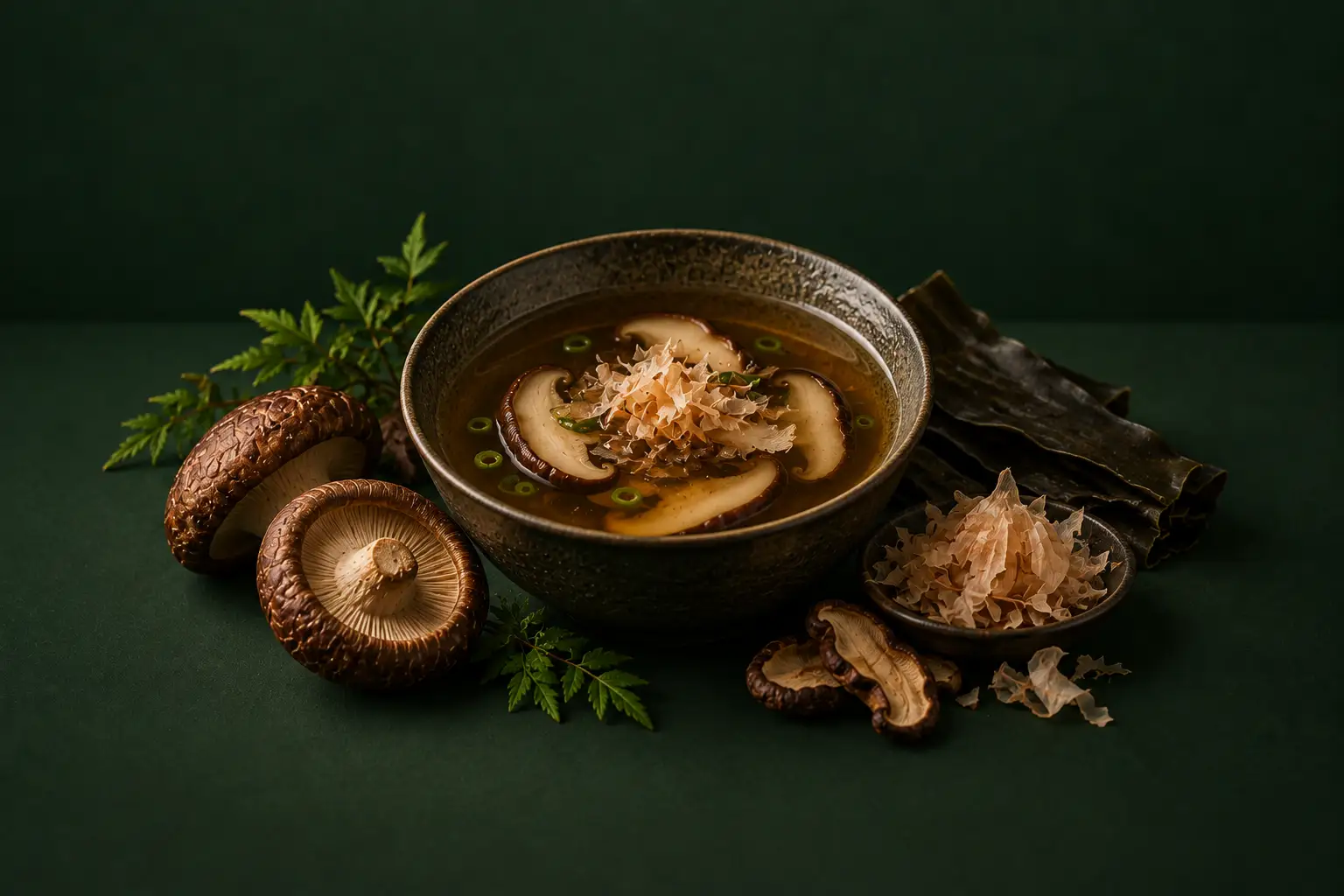
Shiitake has the highest trim loss of anything we grow — 15 to 20% — because the stems are too woody to eat whole. They are also the most flavourful part of the mushroom, which makes throwing them away the single most common waste in a kitchen using shiitake.
This is the fix. A freezer bag of stems, a piece of kombu, cold water and patience. No cooking involved.
Boiling shiitake extracts flavour fast and also extracts bitterness and a muddy quality. Cold steeping takes twelve unattended hours and gives a noticeably cleaner, sweeter, more complex liquid. The only cost is planning.
Dried shiitake makes a stronger dashi than fresh. Drying concentrates guanylate, which is the compound doing most of the umami work — see drying mushrooms at home.
The rehydrated stems are still too woody to eat, but they can go through a second, weaker extraction. After that, compost. The kombu can be sliced thin and simmered with soy and mirin into a small side dish.
Not whole — they are too woody. But they carry more flavour than the caps, so freeze them and use them for dashi, stock or XO sauce.
No. Cold-steep it overnight, and if you want it stronger, hold it at 150°F for fifteen minutes. Boiling kombu makes it slimy and bitter.
Dried, clearly — drying concentrates the umami compounds. Fresh stems and trim make a good everyday dashi and cost nothing.
Four days refrigerated, or three months frozen. Ice-cube trays are the most useful format.
Share this article
Grab a beginner-friendly kit and apply what you just read —
or take the quiz and we’ll match you to the right
starting point.
