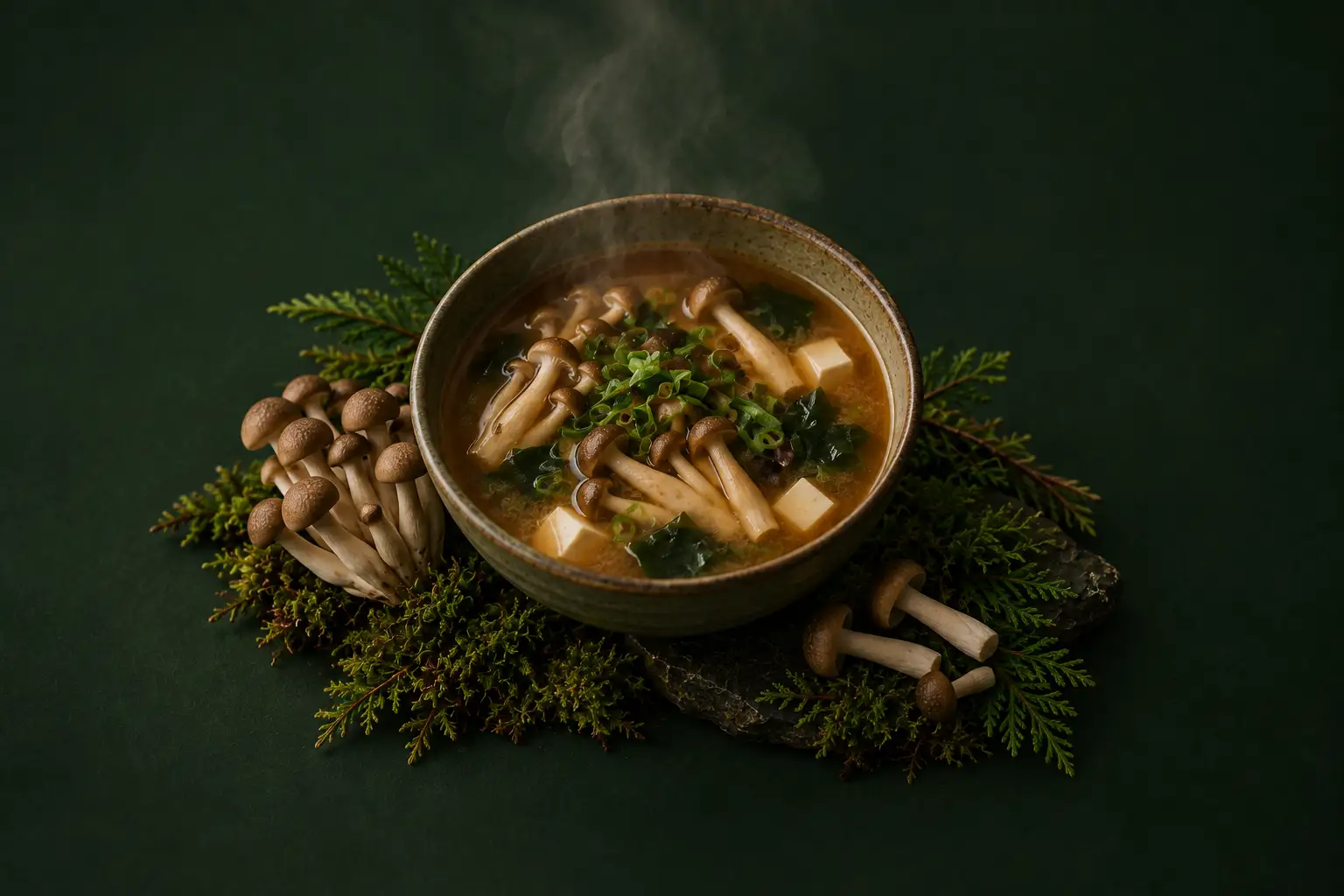
Two rules make miso soup good rather than adequate. Never boil the miso — it kills the aroma and the live cultures and turns the broth flat. And always cook beech mushrooms, which are genuinely bitter raw and turn nutty and buttery after four or five minutes of heat.
Everything else takes ten minutes, and a homemade dashi puts it in a different category from the instant version.
Miso is a fermented paste with volatile aromatics and live cultures. Boiling drives off the aroma and leaves a flat, salty broth. Slaking it in a ladle first also stops it sitting in lumps at the bottom of the pot.
Beech mushrooms raw are properly bitter — this is the one species where a raw taste will put you off it entirely. Four minutes of simmering removes it completely.
Shiitake sliced thin, which deepens the whole bowl. Oyster torn small, added in the last two minutes. Maitake torn into small fronds is excellent. Enoki, if you can get it, needs only a minute.
Add cooked udon or soba to the bowl before ladling. Or a soft-boiled egg, some wilted greens and a spoonful of XO sauce — at which point it stops being a side soup and becomes dinner.
Boiling destroys miso’s aroma and its live cultures, leaving a flat, salty broth. Whisk the miso into a ladle of hot broth off the heat and stir it back in at the end.
Yes. Raw beech mushrooms are noticeably bitter. Four or five minutes of simmering removes the bitterness entirely and leaves a nutty, buttery flavour.
White (shiro) for a mild, slightly sweet soup; red (aka) for something deeper and saltier. A mix of the two is a good default.
Share this article
Grab a beginner-friendly kit and apply what you just read —
or take the quiz and we’ll match you to the right
starting point.
