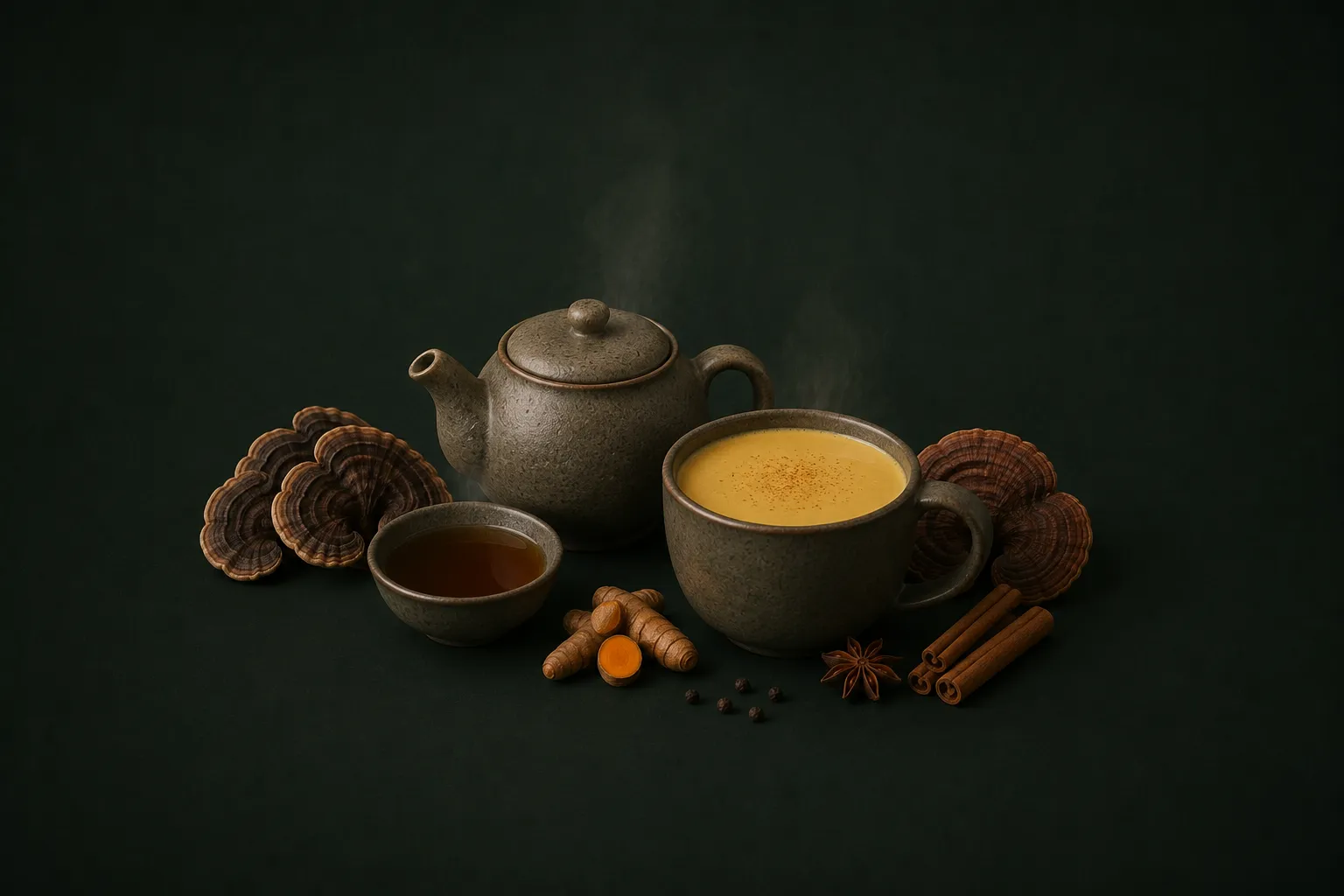
A reishi mushroom tea recipe starts simply: dried Ganoderma lucidum slices simmered in 190–200°F water for 25–35 minutes, then strained into a mug. What comes out is earthy, woody, and slightly bitter — a forest-in-a-cup experience that has been part of traditional East Asian wellness rituals for centuries. Here at Foxfire Mushrooms in Longmont, Colorado, we love introducing people to this ancient preparation with recipes that are approachable, honest about flavor, and genuinely satisfying on a cold Colorado evening.
Below you’ll find three reishi tea recipes — from a simple classic to a spiced ginger version to a creamy golden milk — along with everything you need to know to brew them well at home.
Here is the final post from your collection, reformatted cleanly for the WordPress Gutenberg Block Editor.
Pasting this directly into a standard paragraph block in your Gutenberg editor will automatically convert all the headings, bullet points, numbered instructions, and dividers into their native block equivalents for effortless publishing.
Reishi mushroom (Ganoderma lucidum) is not a culinary mushroom in the typical sense. It doesn’t sauté like a shiitake or crisp up like an oyster. It is dense, woody, and intensely bitter — you would not want to eat it off the cutting board. Instead, it has been dried and prepared as a tea or tincture for centuries in traditional East Asian practice, where simmering the mushroom in hot water draws out its complex compounds and produces a brew unlike anything else in the kitchen.
That distinct bitterness is the hallmark of real reishi. It tells you the tea is working as intended. The flavor softens considerably with honey, ginger, or creaminess from coconut milk — which is exactly why we’ve given you three different preparations below, ranging from straightforward and bold to gentle and approachable.
Let’s be honest: reishi tea is bitter. If you’re expecting something like chamomile or even a mild green tea, you’ll be surprised. The flavor is deeply earthy and woody with a drying, lingering bitterness on the back of the palate — a little like strong, unsweetened dark coffee crossed with forest floor.
That’s not a flaw — it’s the flavor of genuine Ganoderma lucidum. But it does mean that Recipe 1 (simple reishi tea) is not everyone’s first-sip favorite. If you’re brand new to reishi, start with Recipe 2 (Ginger Honey Tea) or jump straight to Recipe 3 (Reishi Golden Milk), which is by far the most accessible and comforting of the three. Once your palate adjusts, the simple tea becomes oddly satisfying — like an acquired taste you’re glad you acquired.
Reishi (Ganoderma lucidum) has been used in traditional East Asian practice for centuries as a warming, restorative brew. Modern researchers continue to study this fascinating fungus — if you want to go down that rabbit hole, there is a growing body of scientific literature worth exploring. We also recommend reading our turkey tail mushroom guide if you’re interested in other traditionally regarded mushrooms.
These statements have not been evaluated by the Food and Drug Administration. This product is not intended to diagnose, treat, cure, or prevent any disease.
The most traditional preparation. Minimal ingredients, maximum flavor — earthy, bitter, and warming. Best enjoyed slowly, with a little honey stirred in.
Prep time: 2 minutes | Cook time: 30 minutes | Serves: 1–2
Tasting notes: Earthy, woody, lingering bitterness. Honey rounds out the edges considerably. Lemon adds brightness without fighting the mushroom.
Adding fresh ginger and a pinch of cinnamon transforms reishi tea into something genuinely warming and spiced. This is the best entry point for anyone who finds plain reishi too intensely bitter.
Prep time: 3 minutes | Cook time: 30 minutes | Serves: 1–2
Tasting notes: Warm, spiced, gently bitter. The ginger’s heat plays beautifully against the earthiness of the reishi, and honey weaves it all together. Far more approachable than plain reishi tea, and a recipe you’ll come back to all winter.
Creamy, warming, subtly earthy, and lightly spiced — reishi golden milk is the most approachable of the three recipes and the one most likely to become a daily ritual. The fat in the coconut milk helps carry the fat-soluble compounds in turmeric, and the black pepper activates turmeric’s curcumin. It looks beautiful in the mug.
Prep time: 3 minutes | Cook time: 5 minutes | Serves: 1
Tasting notes: Creamy, comforting, lightly spiced. The reishi earthiness sits quietly in the background — you know it’s there, but turmeric and cinnamon lead. This is the recipe to make for a friend who says “I don’t like mushroom tea.”
There is something genuinely satisfying about harvesting your own reishi, drying it yourself, and brewing tea from mushrooms you grew on your kitchen counter or in your backyard. Reishi is a slower-growing species than oyster mushrooms, but it rewards patience with a dramatic, shelf-like fruiting body that is striking to look at.
Our Reishi mushroom growing guide covers everything from substrate selection and fruiting conditions to harvesting and drying your first flush. And if you’re just getting started with mushroom cultivation in general, our beginner’s guide to growing mushrooms is the right place to begin.
Shop Reishi Grow Kits and Plug Spawn →
Grow your own, dry it yourself, and brew a cup that came entirely from your own hands. That’s the Foxfire way — from Longmont, Colorado, with a whole lot of love for fungi.
And when you’re done exploring the reishi recipes, head over to our full gourmet mushroom recipes collection for cooking-forward recipes featuring pink oyster tacos, blue oyster stir-fry, lion’s mane crab cakes, and more.
Share this article
Grab a beginner-friendly kit and apply what you just read —
or take the quiz and we’ll match you to the right
starting point.
