

- Scott Brenton
- 10 min read
The first time I picked up a bag of lion’s mane from a farm stand table, it was still cool from the cooler it had
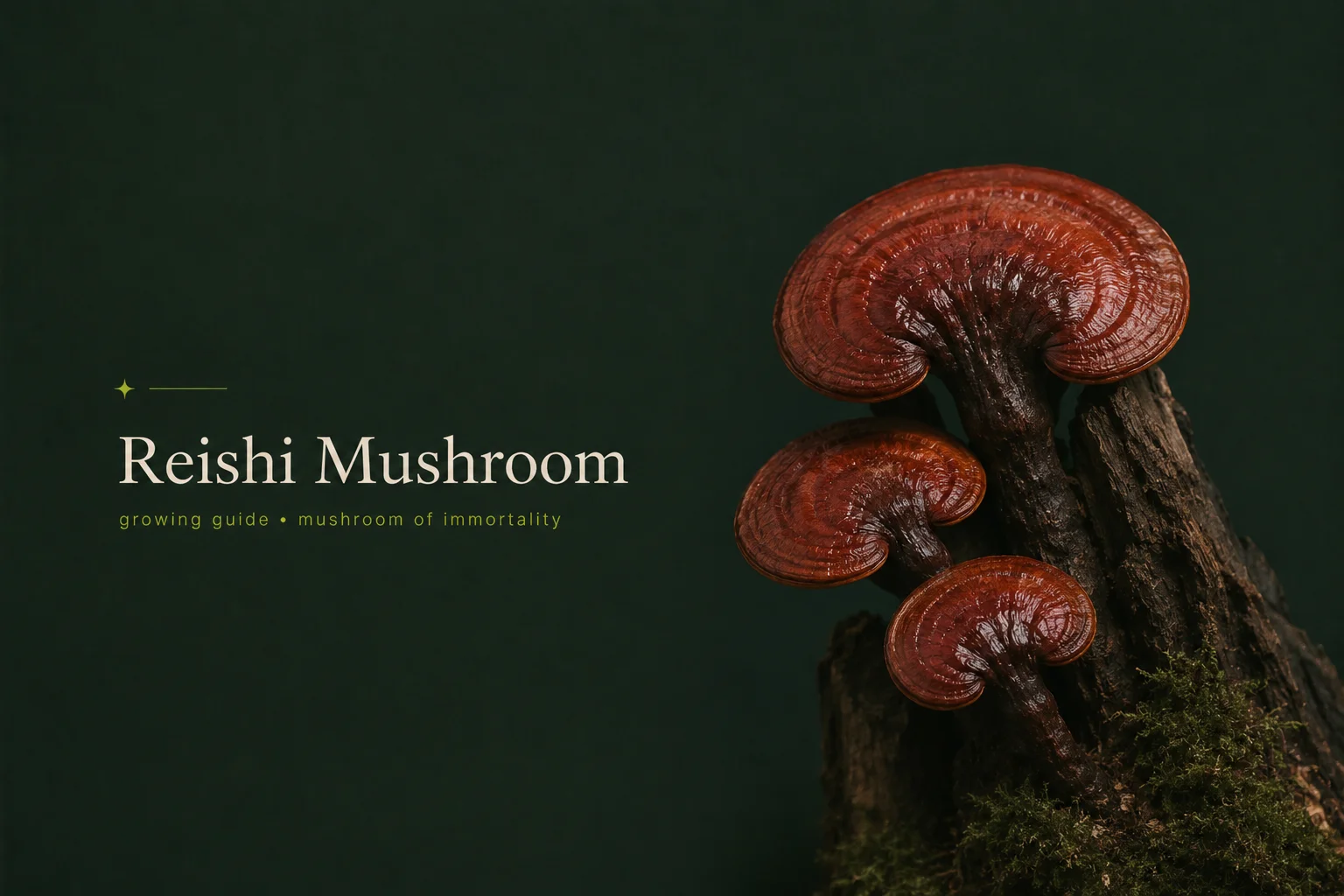
Reishi (*Ganoderma lucidum* and its North American relatives *G. oregonense* and *G. tsugae*) is one of the slowest, most dramatic, and most rewarding fungi a home cultivator can grow. At Foxfire Mushrooms in Longmont, Colorado, we carry colonized grain spawn, plug spawn (100-count bags), and liquid culture syringes for reishi — everything you need to start a grow from scratch.
Unlike oyster mushrooms, reishi is not eaten fresh — it is intensely bitter and woody. Its real value lies in dried preparations: teas, tinctures, and dual extractions. The process from inoculation to a mature, drying-ready fruiting body takes 2–4 months. That’s not a bug; that’s the experience. Few things in home cultivation are as satisfying as watching a glossy, lacquered reishi cap slowly spread into its full fan shape.
This guide covers every stage: substrate selection, inoculation, the two fascinating growth stages (antler and cap), harvesting, drying, and outdoor log cultivation. If you’re new to mushroom growing generally, read our gourmet mushroom species guide first, then come back here.
Reishi is a polypore fungus — a shelf-forming, woody mushroom that grows on the base or roots of hardwood trees (and occasionally conifers). The East Asian species Ganoderma lucidum has been used in traditional Chinese medicine for over 2,000 years and is often called the “mushroom of immortality” or lingzhi. In North America, the closely related G. oregonense and G. tsugae grow natively on conifer wood, particularly hemlock and Douglas fir.
Visually, reishi is unmistakable: a shiny, lacquered cap in red-orange tones with a pale white growing edge. When conditions are right, it spreads into a fan or shelf shape that can reach 12 inches across. The surface looks almost varnished — that distinctive gloss is part of what makes it so striking. When it matures, it releases dense clouds of red-brown spores, sometimes coating surrounding surfaces in a fine orange dust.
Reishi is not edible in the way you’d cook an oyster mushroom. Raw or cooked, it’s intensely bitter and has a texture closer to wood than food. All traditional use — and all modern wellness applications — relies on dried, processed preparations. Think decoctions (long simmered teas), dual-extraction tinctures, and encapsulated powders.
One of the most distinctive and genuinely fascinating things about growing reishi is that it has two visually different growth stages depending on your fruiting chamber’s CO2 level. Understanding the difference is essential — otherwise you may think something has gone wrong when it hasn’t.
When CO2 levels are high and fresh air exchange (FAE) is low, reishi mycelium doesn’t form a cap. Instead, it grows upward in tall, spiky, branching formations called antlers. These protrusions can look coral-like or even alien — some of the most visually striking growth you’ll see in mushroom cultivation.
The antler stage happens because reishi uses elevated CO2 as a signal that it’s still in a confined, low-airflow environment — similar to being deep inside a rotting log. In response, it sends up growth to “search” for better air.
Many cultivators deliberately maintain high CO2 to produce antler-form reishi. Antlers are potent — the concentration of bioactive compounds in antler-form reishi is well-regarded among wellness growers — and some people prefer them aesthetically. If you want antlers, maintain minimal FAE: limit the size and frequency of your fruiting chamber openings.
When you increase fresh air exchange — opening your fruiting chamber more frequently or enlarging the FAE holes — CO2 drops and reishi shifts its strategy. The antlers begin to flatten and spread laterally, eventually forming the classic fan or shelf shape most people associate with the word “reishi.”
As the cap reaches maturity, watch for a color shift: the white growing edge will begin to recede and the surface will deepen in color. When you see the cap start releasing fine red-brown spores — sometimes visibly drifting off in puffs — it’s at or very near peak maturity.
Spore warning: Reishi spore release can be dramatic. The spores are ultra-fine and can coat your fruiting chamber, shelves, and floor in a layer of orange-brown dust. If you have spore sensitivities or are growing indoors, consider moving the fruiting body to an isolated area (like a garage or covered porch) when sporing begins, or harvest just before full release.
Reishi is a wood-lover. It wants the lignin and hemicellulose found in hardwood, supplemented with additional nutrition for heavier flushes. Our mushroom substrate guide covers this in detail, but the short version for reishi: Oak Soy Hull substrate is the right choice. It combines hardwood sawdust with soy hulls for added nutrition, and it’s available at Foxfire in pre-sterilized 9.5lb bags.
If you’re building your own bags, use 4T Unicorn grow bags for reishi — their larger volume gives the mycelium room to run and the fruiting body space to form properly. Sterilize supplemented hardwood substrate at 15 PSI for 2.5–3 hours. This is non-negotiable: the nutritional content of OSH makes it a target for contamination if not fully sterilized.
See our full how to inoculate grain spawn guide for step-by-step sterile technique instructions. For reishi specifically:
During colonization, keep your bags in darkness. Healthy reishi mycelium is white to off-white, often with a slightly ropy or cord-like texture. A faint sweet or earthy smell is normal. Any green, black, pink, or orange patches — or a sour or foul odor — indicate contamination. See our mushroom contamination prevention guide for how to identify and respond.
Here’s where reishi diverges from most gourmet species: it fruits best at the same warm temperature it colonizes at — 75–85°F. Most mushrooms want a slight temperature drop to trigger fruiting. Reishi does not. This makes it easier to manage in summer or in a climate-controlled space, but harder in a cool basement.
Your fruiting chamber needs:
Initiation (the first pinning) can take 2–4 weeks after the substrate is fully colonized. Don’t panic if nothing seems to be happening. Reishi is a slow burn.
Once your antlers have reached a size you’re happy with — typically 3–6 inches tall — or if you want to move to cap production:
Once cap development begins, it can take another 4–8 weeks for the cap to reach full size. Patience is the defining skill in reishi cultivation.
Outdoor log cultivation is one of the most rewarding long-game grows you can attempt. Reishi plug spawn (our 100-count bags) is the right tool for this. Use freshly cut or recently felled hardwood logs — oak is ideal, but cherry and maple also work well. Logs should be 4–8 inches in diameter and 3–4 feet long.
Inoculation process:
Colonization takes 18–24 months in a typical outdoor Colorado environment. That’s not a typo — it’s a long wait. But once established, a single inoculated log can produce reishi fruiting bodies for 3–5+ years.
Plant your reishi logs in early spring in Colorado — once nighttime temps are reliably above 40°F. Bury one end of the log slightly in shaded soil to help retain moisture. Reishi logs need consistent moisture to colonize well, and Colorado’s dry, low-humidity climate means you’ll need to water or mist your logs regularly throughout the growing season — especially during our notoriously arid summers and the low-humidity stretches that arrive after monsoon season ends. A shaded spot with a drip system or regular hand watering is ideal. Some Longmont growers position logs near a downspout or in a low spot that collects irrigation runoff.
Harvest reishi when:
To harvest, twist and pull the fruiting body off the substrate, or cut at the base with a clean knife. Move the fruiting body away from your grow area before full spore release.
Drying is essential — do not eat reishi fresh.
Antler-form reishi can be dried whole or sliced the same way.
Dried reishi requires extraction to unlock its bioactive compounds — you cannot simply eat the dried slices like a food ingredient.
Problem: Only antlers — no cap formation after weeks Solution: Increase FAE. This is almost always a CO2 issue. Reishi won’t cap until CO2 drops.
Problem: Cap or antlers turning brown and shriveling prematurely Solution: Humidity has dropped too low. Mist more frequently, check for drafts, and ensure your RH is consistently at 85–95%.
Problem: Green, black, or pink patches on substrate or mycelium Solution: Contamination. Remove the bag from your grow space immediately. See our mushroom contamination prevention guide for next steps.
Problem: No pins after 4 weeks of fruiting conditions Solution: Check temperature first — if temps are below 70°F, reishi will stall. Also confirm the substrate is fully colonized before expecting pins. Reishi is slow and will not rush.
Problem: Wet rot or slimy patches on the substrate Solution: Overwatering or insufficient FAE creating anaerobic pockets. Let the substrate dry slightly and increase airflow.
Problem: No spore release and cap isn’t progressing after 3 months Solution: This can happen when temperatures fluctuate significantly or when FAE is inconsistent. Stabilize your conditions. Some reishi grows simply run long — 4 months is not unusual.
At Foxfire Mushrooms in Longmont, Colorado, we stock everything you need for a successful reishi grow — from first inoculation to harvest.
For selecting the right spawn format for your setup, see our liquid culture syringes guide and our plug spawn buying guide. Not sure where to start? Our gourmet mushroom species guide compares reishi alongside lion’s mane, shiitake, and oyster varieties to help you plan your first multi-species grow.
Every order from Foxfire ships from Longmont, Colorado with our 30-day money-back guarantee. Grow something remarkable.
Technically you can, but you won’t enjoy it. Reishi is intensely bitter and has a tough, woody texture — even when freshly harvested. All of reishi’s traditional and modern wellness applications use dried, decocted, or extracted forms. Harvest, slice, and dry it.
Antler formations are smooth, white to cream-colored, and grow upward in finger-like or branching shapes. They should look intentional, not collapsed or discolored. Contamination typically presents as patches of green (Trichoderma), black, pink, or red — or as a foul, sour smell. Antlers smell earthy and slightly sweet, the same as healthy mycelium.
They’re closely related but distinct species. G. lucidum is the East Asian species used most in traditional medicine and commonly cultivated from commercial spawn. G. oregonense is the native North American species found on conifers. Both are used for wellness purposes, but cultivated spawn sold in North America is typically G. lucidum or a close relative. Our reishi spawn at Foxfire is a cultivated Ganoderma strain suited to grain and supplemented hardwood substrates.
From inoculation to a mature, dry-ready fruiting body — expect 2–4 months. Grain colonization takes 14–21 days; bulk substrate colonization adds another 3–4 weeks; pinning initiation can take another 2–4 weeks; and cap development takes 4–8 additional weeks. This is not a mushroom for the impatient, but the harvest is worth the wait.
Yes, with modifications. The key difference is temperature — you need 75–85°F, which is warmer than most oyster setups. A simple reptile heat mat or seedling heat mat on the side or bottom of your chamber (not inside) can bring temperatures up. Also plan for the dramatic spore release — have a plan for managing spore dust before it fills your house.
If you’re using colonized grain spawn from Foxfire, no — it’s already fully colonized and ready to use. If you’re making your own supplemented hardwood substrate to mix the spawn into, yes — a pressure cooker at 15 PSI for 2.5–3 hours is required. Pasteurization alone is not sufficient for nutrient-rich OSH substrate. Our pre-sterilized Oak Soy Hull bags eliminate this requirement entirely.
Share this article
The first time I picked up a bag of lion’s mane from a farm stand table, it was still cool from the cooler it had

Last July I opened a box that had sat on a Denver porch for six hours in ninety degree heat, and the grain spawn inside

A liquid culture syringe contains living mushroom mycelium already suspended and growing in a nutrient solution — unlike a spore syringe, which still has to
Grab a beginner-friendly kit and apply what you just read —
or start with our beginner’s guide to find the right first grow.