

- Scott Brenton
- 10 min read
A batch of grain spawn that smells like sour milk within a few days is commonly linked to one issue: the pot used to sterilize
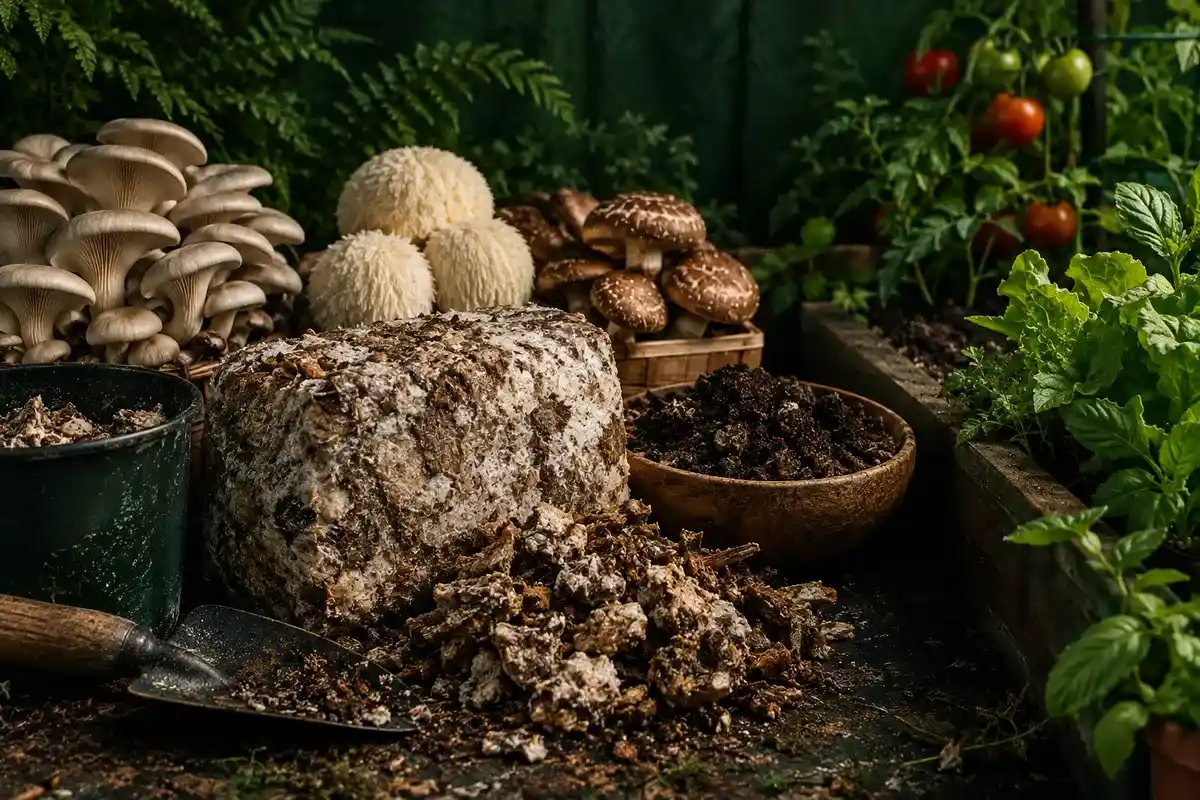
There’s a particular moment familiar to anyone who has grown mushrooms at home: the last flush has come and gone, the block feels lighter in the hands, and what’s left looks more like packed soil than the fresh grow kit it once was. That block still has work left in it. Spent mushroom substrate can be dug into garden beds, used as mulch, or composted, and in each case it becomes a soil amendment that improves what’s already growing there instead of adding to a trash pile. This is one of the most common questions Foxfire Mushrooms hears from home growers who’ve just harvested a kit and are deciding what to do with what’s left behind.
Quick Facts — Typical breakdown time: several weeks to a few months, depending on conditions – Best garden use: raised beds and mulch, not seed starting mix – Nitrogen tie up risk if used fresh: highest in the early weeks – Foxfire substrate base: oak and soy hull – Edible crops: generally suitable once well aged and free of visible contamination – Storage: a couple of weeks max before composting is the better option
Spent substrate is whatever remains once the mycelium has finished fruiting and stops producing new flushes. At that stage the block is usually shrunken from its original size, sometimes slightly grey where surface mycelium has started to die back, and smells like damp forest floor rather than anything fresh off a shelf. Fruiting being finished doesn’t mean the oak and soy hull substrate underneath is spent as material. Across the growing cycle, mycelium breaks down tough lignin and cellulose into something closer to finished compost than raw wood chips, which is the same slow decomposition process home composters otherwise spend a full season trying to encourage. In Foxfire’s Longmont lab, that same breakdown process is part of why substrate blends get tested for structure before they ever ship, since a mix that colonizes cleanly also tends to decompose more predictably once the growing part is done.
Recycling spent blocks instead of discarding them is simple math over a season. Anyone running several grow kits accumulates a real amount of material that would otherwise go straight to the curb.
A block that’s genuinely finished stops forming new pins even after a fresh soak or a humidity boost, feels noticeably lighter than at first flush, and the surface mycelium looks dull rather than bright white. A block between flushes still feels dense, often with visible white mycelium recovering across the cut surface within a few days of rest. When it’s unclear, one more short rest and remoist cycle avoids retiring a block that still had a flush left in it.
Yes. Most grow kits, including Foxfire’s, ship in a plastic bag or liner with a filter patch, and that plastic needs to come off entirely before the substrate goes into soil or a compost pile. Leftover plastic fragments don’t break down and can turn up scattered through a bed for years. Cutting the bag away in large pieces, rather than tearing it, is the more reliable way to avoid leaving small bits behind in the substrate itself.
Fresh spent substrate can be added directly, but waiting is generally the safer approach. Fresh spent substrate can temporarily tie up nitrogen as the remaining wood based material keeps decomposing, which matters more if it’s going in near actively growing plants than into an empty bed.
The more reliable approach is letting the block age a few weeks before use, or working it into soil in the fall so it has a full winter to break down before spring planting. Aged substrate behaves less like raw material and more like finished compost.
| Fresh Spent Substrate | Aged Spent Substrate (4+ weeks) | |
| Texture | Dense, still holds block shape | Crumbly, breaks apart easily |
| Nitrogen availability | Lower, as decomposition continues | Higher, closer to finished compost |
| Best use | A mulch layer on top of soil | Mixed directly into planting soil |
| Risk to seedlings | Can stunt young roots | Minimal risk once aged |
| Smell | Slightly mushroomy, damp | Earthy, soil like |
Aged spent substrate generally has a smaller effect on soil pH than strongly acidic or alkaline amendments, but the exact effect depends on the substrate and the soil it meets. It isn’t a precise pH adjustment tool, so anyone growing pH sensitive plants is better off testing soil directly rather than assuming a particular shift.
Aged spent substrate can be included as part of the lower organic layer in a deep raised bed, similar to how woody debris gets used in a hugelkultur style bed, but it shouldn’t replace the main soil or growing medium. It doesn’t hold nutrients or structure the way real soil does, so it works better as a partial filler in the lower third of a bed than as the primary material a bed is built from.
Breaking the spent block into fist sized chunks lets air reach the material’s center, then it can be layered into a compost pile the way any brown, carbon heavy material would be. Because mycelium already started the breakdown process during fruiting, spent substrate compost tends to finish faster than plain wood chips or straw, generally within a couple of months depending on climate and how often the pile gets turned. It functions closer to mycelium compost than raw organic waste, since the fungus completed much of the difficult early work before composting even begins.
A detail most general gardening advice skips: oyster mushroom substrate, the base for most beginner Foxfire kits, tends to compost faster and more evenly than Lion’s Mane or Reishi substrate, since oyster mycelium is generally more aggressive at breaking down lignin. Mixing spent blocks from different species in one pile means the oyster material usually finishes first, while denser Reishi based blocks can still have chunky, undecomposed sections weeks later. That’s a normal outcome, not a sign the pile is doing something wrong.
Leafy greens, brassicas, and heavy feeders like tomatoes and squash tend to respond well when aged spent substrate is worked in as a soil amendment for vegetables, largely because it can improve water retention and add organic matter without the salt buildup sometimes tied to bagged fertilizers. Root vegetables tend to be more forgiving of chunkier, less finished substrate since they’re less sensitive to surface texture. Seed starting mix is the one place spent substrate isn’t recommended, since even aged material stays coarser and more variable than a proper seed starting blend, and delicate seedling roots do better in something finer and more consistent.
Spent substrate isn’t limited to annual vegetable beds. Worked into soil around established perennials or shrubs, it can function similarly to other slow release organic mulch, supporting moisture retention without needing to be dug in deeply. Around young trees, a thin layer kept a few inches back from the trunk mimics the woody debris that naturally builds up at a forest edge, the kind of environment many garden mushroom species originate from in the first place.
Lion’s Mane substrate tends to hold its shape longer after fruiting ends, since Lion’s Mane mycelium is generally less aggressive about consuming woody material than oyster species. Reishi is denser still, largely because it’s a slower growing, harder wood associated species even under cultivation, so its spent blocks generally take longer to soften in a compost pile or garden bed. Mixed spent blocks from a Foxfire Cultivator’s Starter Bundle, or from several grow kits collected over a season, won’t break down at the same rate, so denser blocks typically need extra time or should be chopped smaller before going into soil.
If a bed isn’t ready yet, a spent block can sit for a couple of weeks in a loosely covered container with a few airholes, kept cool and out of direct sun. Sealing it fully airtight tends to encourage the wrong kind of mold rather than continued natural breakdown. Beyond a couple of weeks, starting the composting process is generally the better option, since the material keeps decomposing either way and doing so in a proper pile puts that process to use rather than letting it sit in a bag.
Spent doesn’t mean sterile. Spent substrate can still carry contaminant molds or competitor fungi that appeared late in the growth cycle, particularly if a block sat too long after its last flush before being used. A quick look and smell check before adding substrate to a bed intended for edible crops is a reasonable precaution. A sour or ammonia like smell, or visible green, black, or otherwise unusual growth, is a reason to keep the block away from edible beds and future mushroom growing areas. For clearly contaminated material, following local disposal guidance is the safer route rather than adding it to an active compost pile, the same standard Foxfire applies internally whenever a block fails a contamination check before it would otherwise ship.
A spent block doesn’t need much deliberation. Breaking it up, letting it age, and working it into whatever bed needs the most help that season covers most situations, and there’s a quiet satisfaction in watching a bed that started as a grow kit block turn into noticeably better soil months later. For anyone ready to start a new growth while this batch of substrate finishes its second life in the garden, Foxfire’s grow kits and the Cultivator’s Starter Bundle are built to keep that cycle moving, from culture to harvest to garden and back again.
Yes, in small amounts mixed into the top inch of soil, though it’s better suited to outdoor beds and containers where there’s more room for it to keep breaking down without crowding roots.
Timing varies with climate and conditions, but most spent blocks break down over a couple of months, with denser substrates like Reishi generally taking longer.
It can attract fungus gnats or pill bugs short term while still moist and breaking down, but this typically settles once the material dries out and integrates into the soil.
A light bonus flush is sometimes possible with extra humidity and care, but yields drop off quickly, which is why most growers treat the first few flushes as the real harvest and the garden as the substrate’s next use.
Not exactly. Commercial mushroom compost is usually a byproduct of large scale button mushroom farming and often contains gypsum and manure additives, while a spent home grow block is closer to pure broken down wood and hull material.
An organic nitrogen source, like blood meal, can help offset temporary nitrogen tie up while fresh substrate finishes breaking down, though this generally isn’t necessary once the substrate has aged.
Only if the contamination is minor and the block is kept away from edible beds and future growing areas. For anything resembling aggressive mold like Trichoderma, local disposal guidance is the safer path rather than adding it to a compost pile.
Share this article
A batch of grain spawn that smells like sour milk within a few days is commonly linked to one issue: the pot used to sterilize
Grab a beginner-friendly kit and apply what you just read —
or start with our beginner’s guide to find the right first grow.