

- Scott Brenton
- 3 min read
What it is Ganoderma lucidum, called reishi in Japan and lingzhi in China. It fruits either as a fan-shaped bracket with a glossy, lacquered red-brown
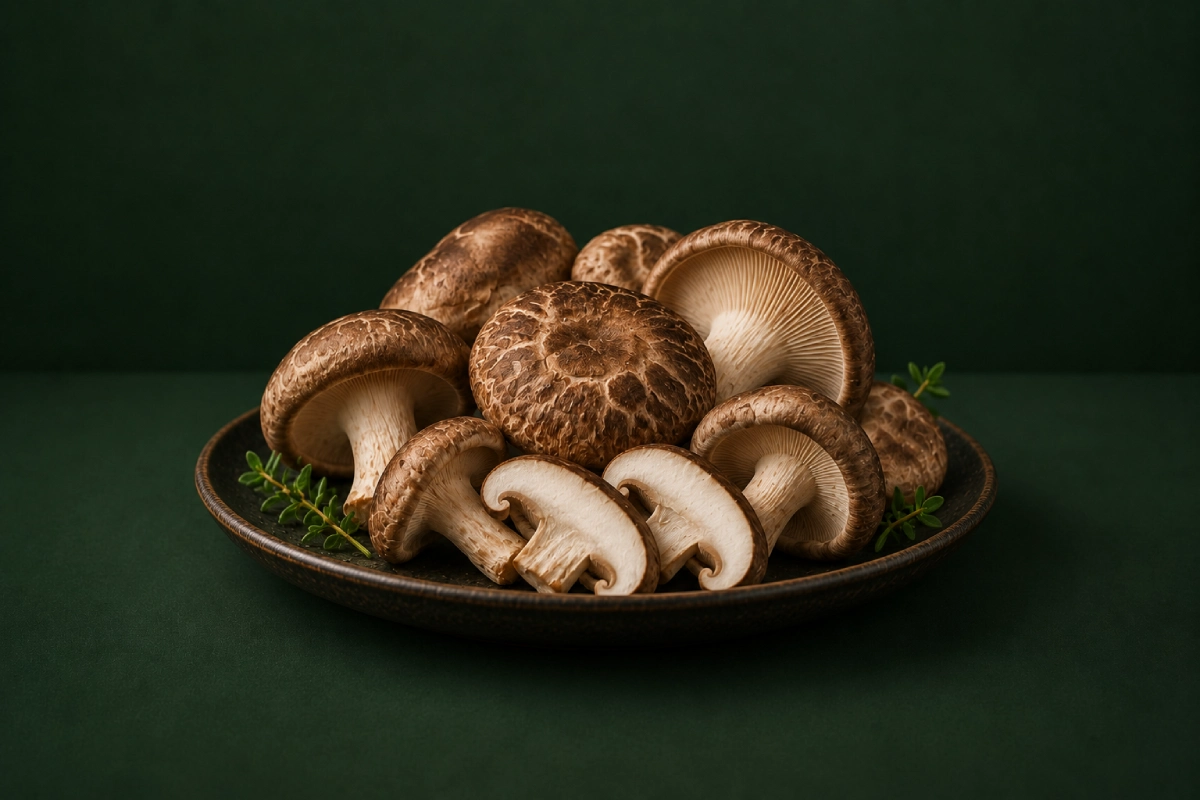
Lentinula edodes, grown on supplemented hardwood. Tan-brown caps, sometimes cracked into a pale “donko” pattern when they fruit slowly in cool air — that cracking is a quality mark, not a flaw. Shiitake is the second most-cultivated mushroom on earth and the one most people already recognise, which makes it the easy sell at a market stall and a reliable line for kitchens.
Fresh shiitake and dried shiitake are genuinely different ingredients. Drying concentrates guanylate and pushes the flavour toward smoke and leather; fresh is rounder, meatier and better in a pan. Most recipes assume dried without saying so.
Assertive: deep umami with a smoky, faintly leathery edge that stands up to soy, miso, garlic, chilli and red wine without disappearing. It is the least delicate species on our list and the hardest to overwhelm.
Give it more time and more fat than an oyster. The caps are firm and want to soften before they brown. Slice thick, start in a hot dry pan, add fat once the moisture has gone, and cook a good six to eight minutes.
Never throw the stems away. Shiitake stems are too woody to eat whole but they are the most flavourful part of the mushroom — freeze them in a bag and pull from it for stock, dashi and XO all year.
Remove the stem where it meets the cap. Edible trim loss is 15–20% — the highest of anything we grow — which is why the price per usable pound is higher than the shelf price suggests, and why the stock use matters. Do not wash: shiitake caps absorb water readily and turn slimy in the pan.
Five to seven days at 34–38°F in paper. Shiitake tolerates the fridge better than the oysters, and slightly dehydrated shiitake is still perfectly good — it concentrates rather than spoiling, unlike a wet species that slimes.
Year-round in steady volume, with cooler months producing thicker, cracked-cap fruits. Check this week’s harvest for grade and quantity.
Not whole — they are woody. But they carry more flavour than the caps, so freeze them and use them for dashi, stock or XO sauce. Binning them is the most common waste in a kitchen using shiitake.
They are different. Fresh is meatier and better for searing and roasting; dried is more concentrated and smoky and better for broths and braises. Neither substitutes cleanly for the other.
That is donko-style fruiting — slow growth in cool, dry air splits the cap surface. It is a mark of quality and the flesh underneath is thicker than usual.
No. The caps soak up water and go slimy when they hit heat. Wipe them with a dry cloth or a soft brush.
Share this article
What it is Ganoderma lucidum, called reishi in Japan and lingzhi in China. It fruits either as a fan-shaped bracket with a glossy, lacquered red-brown

What it is Hypsizygus tessulatus — beech mushroom, shimeji, buna-shimeji in its brown form and bunapi in the white. Grown in tight bouquets of fifty

What it is Black pearl is a Pleurotus hybrid — usually credited as a cross of ostreatus and eryngii — grown for the best traits
Grab a beginner-friendly kit and apply what you just read —
or start with our beginner’s guide to find the right first grow.