

- Scott Brenton
- 3 min read
What it is Ganoderma lucidum, called reishi in Japan and lingzhi in China. It fruits either as a fan-shaped bracket with a glossy, lacquered red-brown
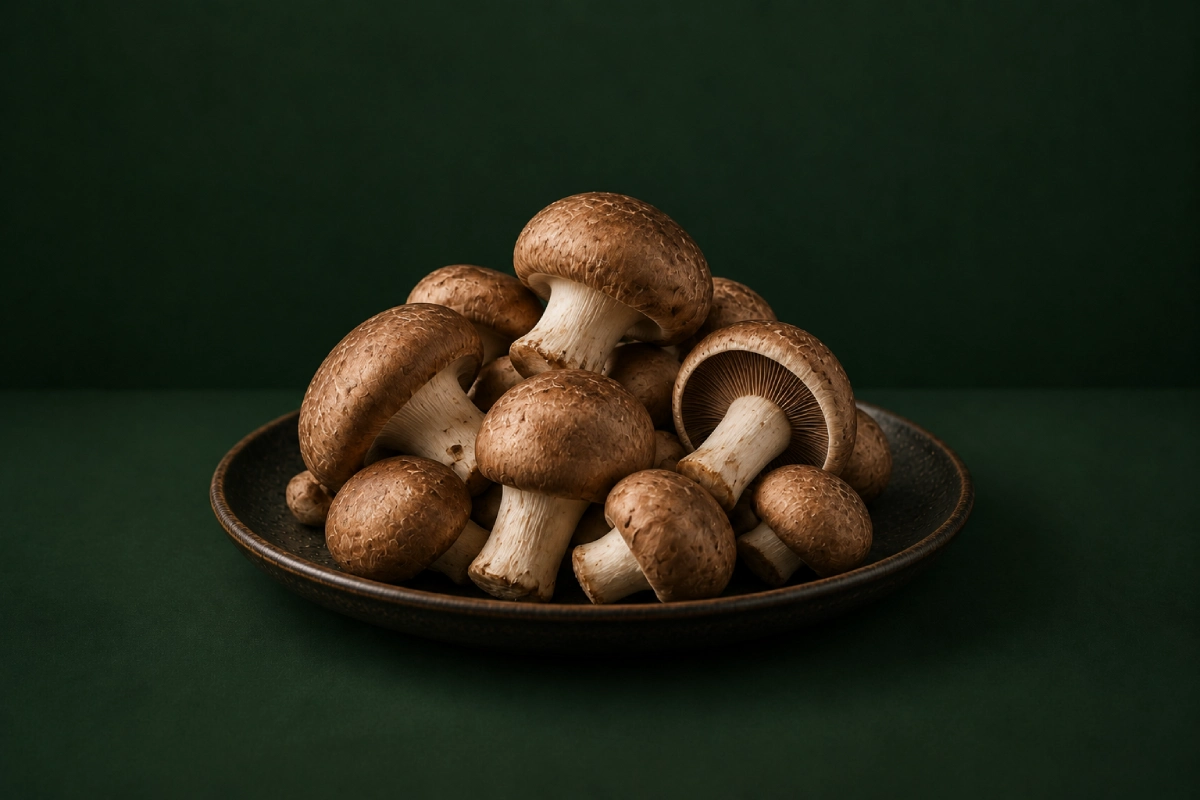
Pholiota adiposa, sometimes sold as cinnamon cap or chestnut mushroom. Clusters of small, glossy bronze caps — sometimes with fine scales — on slim white stems. Note the name clash: in the UK, “chestnut mushroom” means a brown button. This is a different thing entirely, and better.
Nobody asks for it because nobody has heard of it. Everybody who tries it buys it again, which makes it the ideal thing to put in a Share box and the best single argument for a subscription over a shopping list.
Nutty and sweet with a peppery finish, but the flavour is not the headline. The headline is that it stays crunchy — the stems keep a real bite through a twelve-minute roast, which almost no other cultivated mushroom does. In a dish of otherwise soft textures it is the element people notice.
Keep the caps whole. Chestnut’s appeal is the shape and the bite; slicing it turns it into anonymous brown mushroom.
Caps should be glossy and domed with a deep bronze colour, stems white and firm. As it ages the caps flatten, dull and start dropping a fine rust-brown spore dust — a dusted tray is a sign of age. Clusters should feel dry and springy.
Break the cluster apart and trim the base. Trim loss around 6–8%; the slim stems are all edible. Chestnut shrinks less than the oysters because the flesh is denser and drier to begin with, so a pound goes further on the plate than its size suggests.
Four to six days at 34–38°F in paper. It ages more gracefully than the fast oysters but the caps dry and crack at the edges by day five; still perfectly usable cooked, just less pretty.
Most weeks in moderate volume — it is a slower species to fruit than the oysters, so quantities are smaller. It shows up regularly in Share boxes and on the harvest board.
No. In the UK “chestnut mushroom” means a brown cremini. This is Pholiota adiposa, a cluster-growing gourmet species with bronze caps and a crunchy stem — a completely different mushroom.
Nutty and sweet with a peppery finish. The distinguishing feature is texture: they stay crunchy after roasting when most mushrooms have gone soft.
Leave the caps whole and just break the clusters apart. Slicing destroys both the look and the bite that make the species worth buying.
Four to six days refrigerated in paper. The caps dry and crack before they slime, so late-week mushrooms still cook well.
Share this article
What it is Ganoderma lucidum, called reishi in Japan and lingzhi in China. It fruits either as a fan-shaped bracket with a glossy, lacquered red-brown

What it is Hypsizygus tessulatus — beech mushroom, shimeji, buna-shimeji in its brown form and bunapi in the white. Grown in tight bouquets of fifty

What it is Black pearl is a Pleurotus hybrid — usually credited as a cross of ostreatus and eryngii — grown for the best traits
Grab a beginner-friendly kit and apply what you just read —
or start with our beginner’s guide to find the right first grow.