

- Scott Brenton
- 3 min read
What it is Ganoderma lucidum, called reishi in Japan and lingzhi in China. It fruits either as a fan-shaped bracket with a glossy, lacquered red-brown
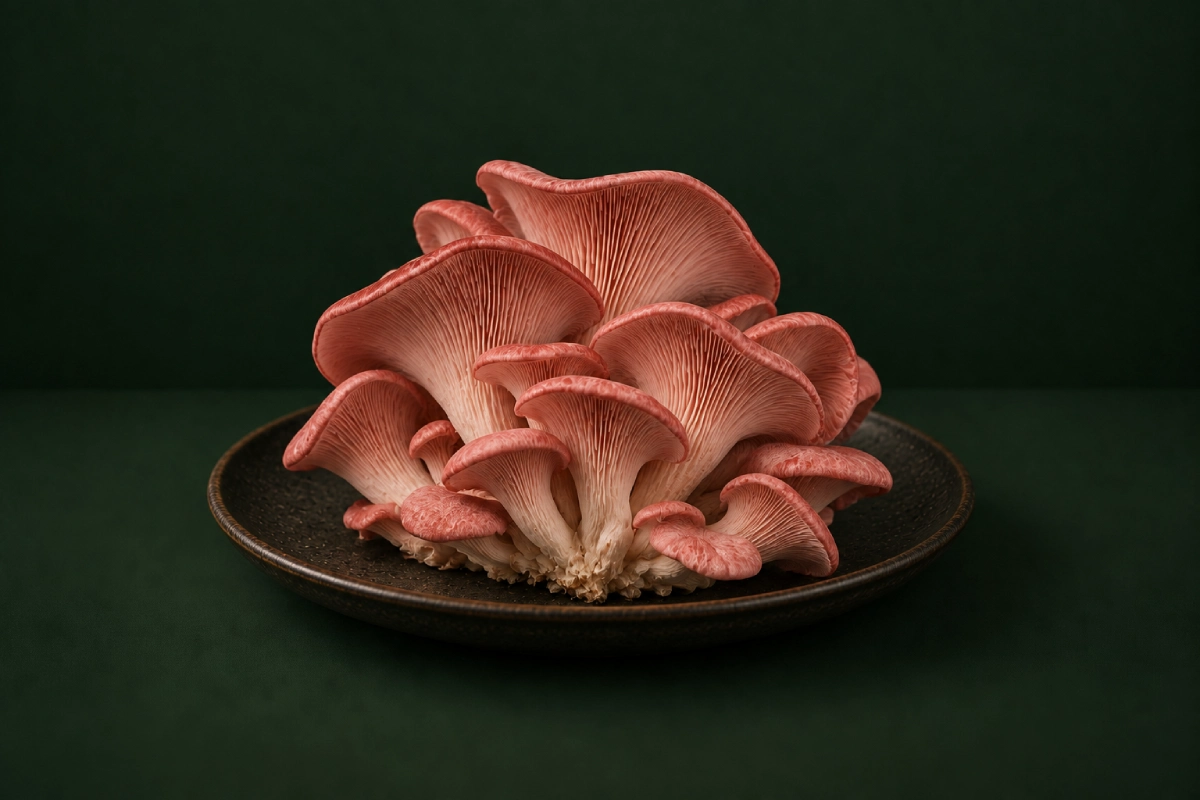
Pleurotus djamor, a tropical oyster that fruits in tight ruffled rosettes the colour of a flamingo. It grows absurdly fast — from pinning to harvest in three or four days — and it decays almost as fast. Two to three days is the honest shelf life, and there is no logistics chain in the world that gets a two-day mushroom from a warehouse to a supermarket shelf.
That is the whole commercial argument for local mushrooms in one species. If you want pink oysters, they have to come from someone within driving distance of your kitchen. Ours are cut in Longmont and delivered the same day.
Raw, it smells faintly of watermelon rind. Cooked hard, it turns savoury and slightly ham-like, and the flesh separates into strands rather than staying in slabs — which is why it gets called the bacon mushroom. The colour cooks out to a tan-orange; nothing you do will keep it pink on the plate, so use the colour raw as a garnish or accept the trade.
Pink oyster wants more heat and more time than you think. Undercooked it is tough and sour; properly crisped it is one of the best textures in the fungal kingdom. Aim for real colour and rendered edges.
Do not braise it, do not put it in a soup, and do not treat it gently. Pink oyster is a species that rewards violence: high heat, hard colour, salt at the end.
Vivid, saturated pink with tightly ruffled edges. Fading toward salmon or beige means it is on day three. Any darkening at the base of the cluster, or a sour smell, and it is finished — this species goes from perfect to over in hours, not days. Buy it for the meal you are cooking that night, not for the week.
Trim the base, tear into strips along the grain of the ruffles. Trim loss is minimal, around 4% on same-day product, but the cooked yield is lower than other oysters — it loses more water and shrinks noticeably, so buy roughly a third more by weight than you would for blue oyster.
You mostly do not. Cook it the day it arrives or the day after, in paper in the coldest part of the fridge. If you cannot get to it, crisp the whole batch as mushroom bacon and keep it in a jar — it holds a week and gets used on everything.
Warm months mainly, in short bursts, because it fruits fastest when the room is warm. It appears on the harvest board as a limited line and usually sells out to Share members and market customers the same week. Chefs on standing orders get first call.
Natural pigment in the fruiting body of Pleurotus djamor, a tropical oyster species. It is not dyed or bred for colour, and the pink largely cooks out — expect tan-orange on the plate.
Two to three days refrigerated, and that assumes they were cut the day you got them. It is the shortest-lived mushroom we grow and the clearest case for buying local.
Crisped hard with salt and a little smoke, the texture is genuinely bacon-adjacent — strands that shatter at the edge and chew in the middle. The flavour is savoury and faintly ham-like rather than pork.
Better not. Raw they are tough and can be sour, and oyster species are much more digestible cooked. Cook them hot and hard.
Share this article
What it is Ganoderma lucidum, called reishi in Japan and lingzhi in China. It fruits either as a fan-shaped bracket with a glossy, lacquered red-brown

What it is Hypsizygus tessulatus — beech mushroom, shimeji, buna-shimeji in its brown form and bunapi in the white. Grown in tight bouquets of fifty

What it is Black pearl is a Pleurotus hybrid — usually credited as a cross of ostreatus and eryngii — grown for the best traits
Grab a beginner-friendly kit and apply what you just read —
or start with our beginner’s guide to find the right first grow.