

- Scott Brenton
- 10 min read
The first time I actually stuck with a lion’s mane habit longer than two weeks, it was because I moved my gummy from the kitchen
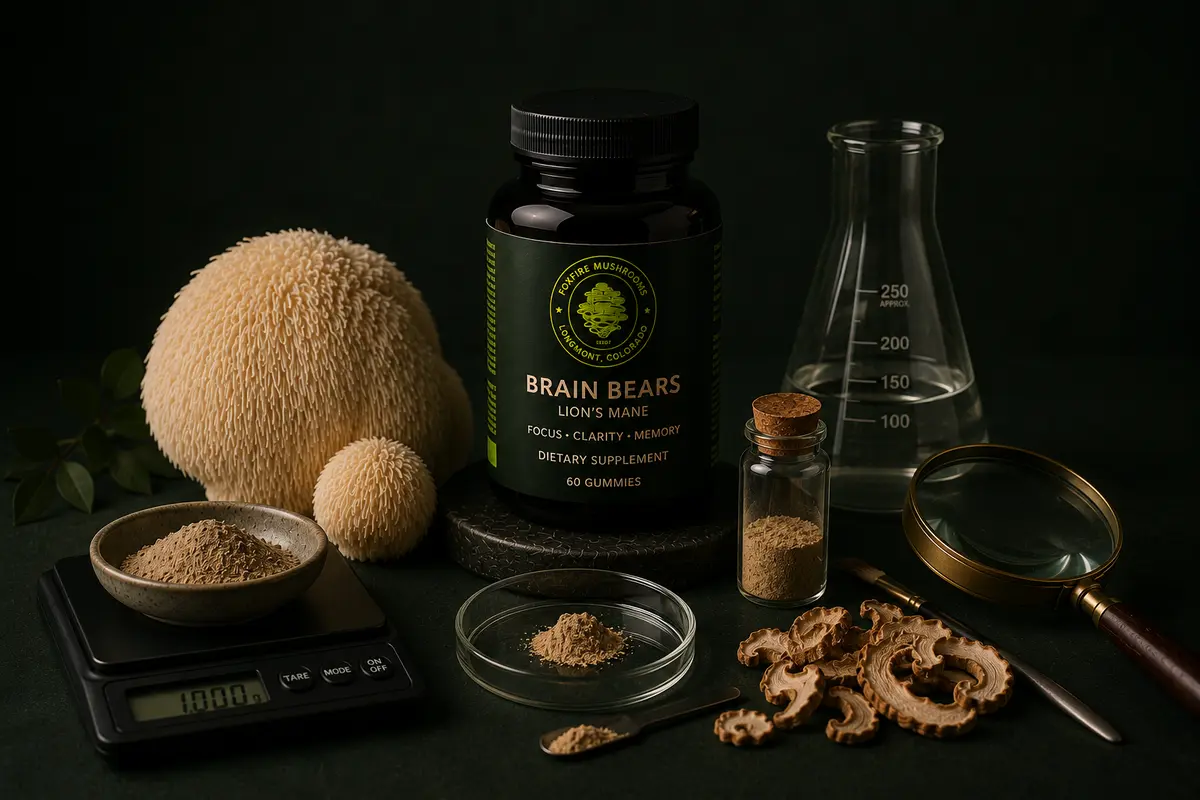
Last spring an email showed up in the Foxfire Mushrooms inbox from a woman in Ohio who wanted to know exactly what percentage of beta glucans was in the Brain Bears gummies she had just ordered, and whether that number was something a lab actually measured or just something printed on a label because it sounded good.
Beta glucan testing is the process a lab uses to measure how much of the actual immune supporting compound is present in a mushroom product, rather than starch or plain grain filler, and it is one of the most useful numbers a shopper can ask about before buying any mushroom supplement.
Quick Facts — Testing method: enzymatic assay validated under AOAC guidelines, developed by McCleary and Draga (2016) – Typical range in a fruiting body extract: 30 to 40 percent – Typical range in mycelium grown on grain: 5 to 7 percent, sometimes lower – Starch content in most mycelium on grain powders: 35 to 40 percent – Standard lab turnaround for a Certificate of Analysis: about 10 business days – Foxfire Brain Bears content: printed per batch on the product COA.
Beta glucans are long chain sugars found in the cell walls of mushrooms, and they are the compounds most closely tied to immune support in mushroom research. A lab test does not just confirm that mushrooms were used somewhere in the process. It measures what percentage of the finished powder or extract, by dry weight, is made up of these specific compounds versus everything else sitting in the jar.
The industry standard comes from a method McCleary and Draga published in the Journal of AOAC International in 2016, using controlled acid hydrolysis followed by enzyme treatment to separate true beta glucan from starch in the same sample. A Certificate of Analysis referencing an AOAC validated glucan method is usually built on this work.
This comes down to which part of the mushroom’s life cycle produced the material. Mycelium is the thread like root structure that spreads through a growing medium before a mushroom ever forms. It is alive and biologically active, but it has not built the dense, layered cell walls that a mature fruiting body develops once it pushes above the substrate and opens into a cap.
Fruiting bodies, the actual mushrooms people picture and cook with, concentrate these compounds at much higher rates because that is where the mushroom invests its structural energy. When mycelium is grown directly on grain and the whole colonized block is dried and ground, the finished powder typically runs 5 to 7 percent beta glucan and closer to 35 to 40 percent starch, since the grain never gets separated out before packaging.
| Factor | Mycelium on Grain | Fruiting Body Extract |
| Typical beta glucan content | 5 to 7 percent | 30 to 40 percent |
| Typical starch content | 35 to 40 percent | Minimal, mushrooms store glycogen instead |
| Growing time | Faster, a few weeks | Slower, requires a full fruiting cycle |
| Unique compounds | Can contain erinacines in Lion’s Mane, not found in the fruiting body | Higher concentration of beta glucans and triterpenes |
| Best verified by | Lab test showing both beta and alpha glucan levels | Beta glucan test alone is usually sufficient |
Mycologist Jeff Chilton of Nammex, a longstanding voice in commercial mushroom testing, has pointed out that mycelium grown on grain often tracks the grain’s nutritional profile almost exactly, meaning a buyer is largely paying for rice or oat starch. Mycelium is not automatically worthless, though. Lion’s Mane mycelium can contain erinacines, compounds studied for crossing the blood brain barrier, which the fruiting body does not produce in meaningful amounts. The right growing method depends on which compound someone actually wants.
Not every lab report carries the same weight. A trustworthy test comes from a facility accredited to ISO or IEC 17025, the standard most legitimate testing labs hold, using a validated method rather than an in house shortcut. The report should also state whether it measured beta glucan specifically, rather than lumping it with alpha glucan under a vaguer term like “total polysaccharides.”
Chain of custody matters too. A credible lab documents which batch or lot a sample came from and when it was pulled, so the result traces back to a specific production run rather than applying loosely across an entire product line. Brands that cannot answer which batch a given COA covers usually have not thought this through.
Ask for the Certificate of Analysis, usually shortened to COA, and see if the company hands it over without hesitation. A real COA from an accredited lab lists the specific percentage, the testing method used, the batch or lot number it applies to, and the date it was run. It should be traceable to the exact bag or bottle on your counter, not a general document from years ago reused for every batch that ships afterward.
A company that answers a beta glucan question with vague language like “our mushrooms are potent and pure” instead of a number and a document is usually telling you the test either was not run or the result was not one they wanted to share. This is not always malicious. Sometimes a small brand genuinely has not budgeted for lab testing yet. But it does mean the shopper is buying on trust alone rather than on a verified figure, and a COA is honestly the fastest way to judge mushroom supplement quality before you ever open the bottle.
A beta glucan reading by itself is a starting point, not the whole story. Ten grams of a low potency extract at five percent delivers roughly 500 milligrams of the compound. Five grams of a well made extract at thirty five percent delivers 1,750 milligrams, well over three times as much from half the material. Serving size and percentage need to be read together, which is why a cheaper bottle can actually cost more per milligram of what you are paying for.
Alpha glucans, a different and less studied sugar in the same mushrooms, sometimes get folded into marketing claims about “polysaccharide content” without distinguishing which type was measured. A test reporting total polysaccharides instead of the beta form specifically tells you less than it appears to.
Not always. A high percentage tells you what was present in the raw extract, not how much of it the body can actually use. Hot water extraction breaks down the tough cell walls beta glucans are locked inside, which is why most reputable Lion’s Mane and Reishi products use it, either alone or combined with an alcohol step that pulls out separate compounds like triterpenes. A very high number from a product with no extraction at all, meaning it is just dried and powdered mushroom, can also mislead, since raw powder locks those compounds behind cell walls the body cannot easily break down.
Every batch of Brain Bears Lion’s Mane gummies gets sampled and sent to a third party lab for testing before it goes on sale, and the resulting COA is available to anyone who asks by emailing support. The lab confirms the concentration of the extract used and screens for heavy metals and microbial contamination at the same time, since a clean immune supplement should be clean on every front, not just the one number people ask about most. Foxfire runs Brain Bears through both a hot water and an alcohol extraction step in the Longmont lab before it reaches a gummy mold, since neither step alone captures everything the mushroom has to offer.
Here is the honest part. These readings shift slightly between batches, even when the recipe and supplier stay the same, because mushrooms are agricultural products and natural variation happens the same way it does with coffee beans or wine grapes from one harvest to the next. Foxfire does not chase a single fixed number on the label for this reason. The COA for each batch reflects what that batch actually tested at, which sometimes means one runs a couple points higher or lower than the last. Growers who want this explained in person can also book a consultation with the Foxfire team.
If you want to see what a tested product looks like, the Brain Bears Lion’s Mane gummies come with a batch specific COA available on request, and every wellness item in the Foxfire shop ships from the Longmont lab with free shipping on orders over 75 dollars.
Restaurants and markets sourcing through the wholesale program can request the same documentation before placing a standing order. Shop the wellness line, or ask for a Certificate of Analysis before you buy, that request alone tells a company a lot about who they’re selling to.
For a fruiting body extract, 30 to 40 percent is considered strong and matches what independent testing typically finds, though extraction method matters as much as the raw number.
Not automatically, but it should be labeled honestly and tested, since most mycelium on grain products run 5 to 7 percent beta glucan and 35 to 40 percent starch.
Email the company and ask for the COA tied to the batch or lot number on your product. A transparent company will send it within a day or two.
Beta glucans are tied to immune support research, while alpha glucans are a related but different sugar, closer to starch, with far less documented benefit.
No, cooking with heat, especially simmering or hot water extraction, helps break down cell walls and makes these compounds more available to the body, not less.
Mushrooms are agricultural products, so natural variation in growing conditions, harvest timing, and extraction shifts the exact figure slightly from batch to batch.
Not accurately. This testing requires validated lab methods like the AOAC recognized enzymatic assay, so it needs an accredited third party lab, not a home kit.
Share this article
The first time I actually stuck with a lion’s mane habit longer than two weeks, it was because I moved my gummy from the kitchen

I noticed it about three weeks into taking Lion’s Mane every morning: my stomach stopped feeling unsettled after coffee. A grower at Foxfire Mushrooms laughed

I had two bottles of Lion’s Mane capsules sitting on my kitchen counter last winter, one from a supplier I couldn’t place and one that
Grab a beginner-friendly kit and apply what you just read —
or start with our beginner’s guide to find the right first grow.