

- Scott Brenton
- 3 min read
Confit is preservation by fat: cook something slowly submerged in oil, then store it in that oil, and it keeps for weeks. For mushrooms it
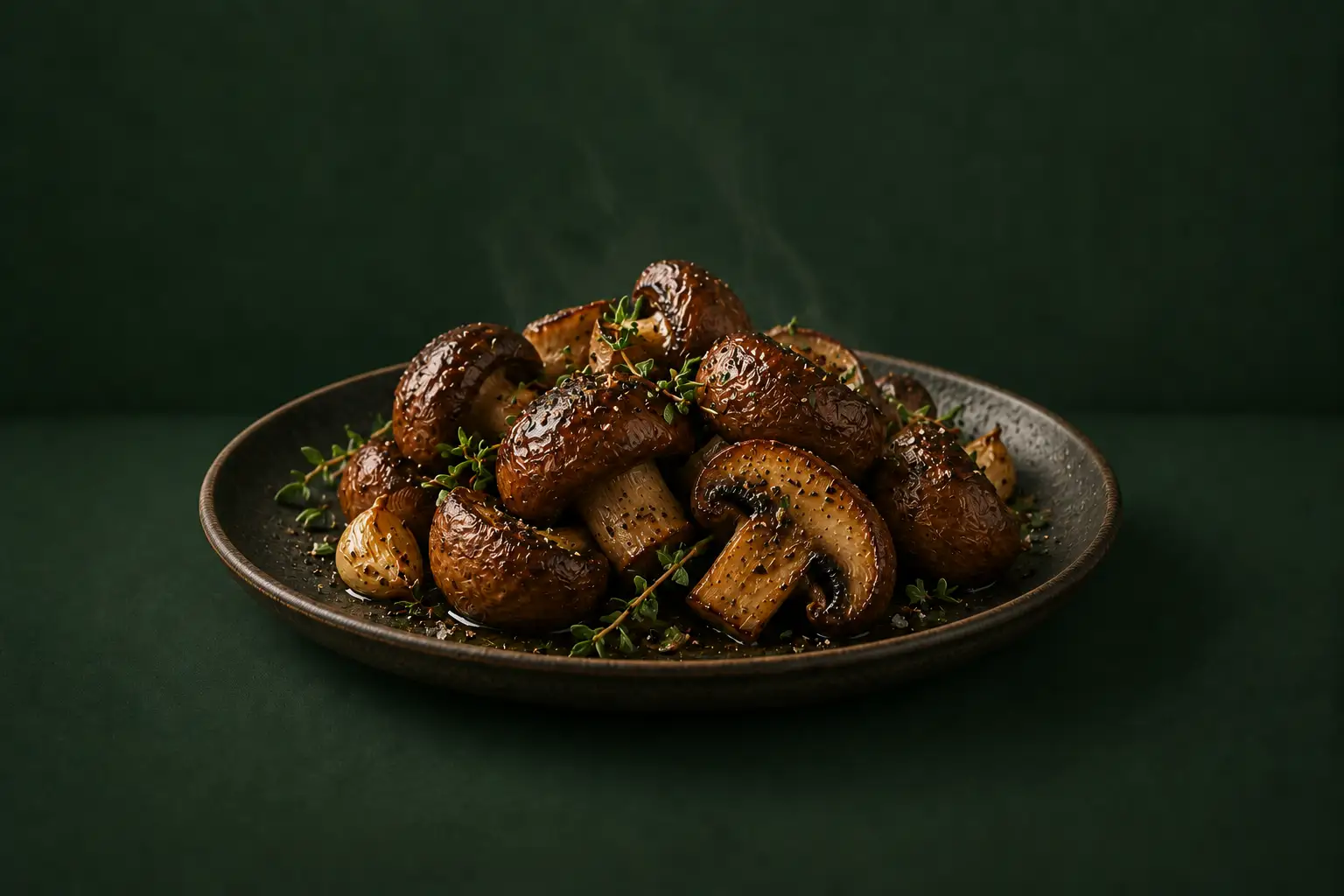
Chestnut mushrooms have one job on a plate: texture. In a dish of purées, braises and soft things, they are the element that has bite — and unlike almost every other mushroom, that bite survives twelve minutes at 425°F.
So keep them whole, do not overthink the seasoning, and put them where the contrast matters.
The whole reason to buy chestnut is the crunch, and past about fifteen minutes it starts to go. Check at twelve. A slightly underdone chestnut mushroom is much better than a soft one.
Watch for the spore dust. A tray of chestnut with fine rust-brown dust underneath is past its peak — still fine to cook, but the caps will have flattened and softened.
Beech mushrooms keep a snappy stem. King trumpet stays firm but reads as dense rather than crunchy. Everything else in the species guide goes tender.
Yes — that is the reason to buy them. The stems keep a real bite through a twelve-minute roast, which almost no other cultivated mushroom does.
No. Break the clusters apart and leave the caps whole. Slicing loses both the shape and the bite that make the species distinctive.
Spore drop, which means the caps have opened and the mushroom is past its peak. Still good cooked, just softer and less pretty.
Share this article
Confit is preservation by fat: cook something slowly submerged in oil, then store it in that oil, and it keeps for weeks. For mushrooms it

Drying concentrates mushrooms; grinding makes that concentration usable in seconds. A spoonful of mushroom powder adds savoury depth to almost anything without adding an ingredient

Duxelles is French, old, and the single most useful mushroom preparation there is: mushrooms chopped very fine and cooked down with shallot and butter until
Grab a beginner-friendly kit and apply what you just read —
or start with our beginner’s guide to find the right first grow.