

- Scott Brenton
- 5 min read
The honest framing We grow mushrooms indoors for a living and we do not sell anything foraged. So this page has no commercial interest in
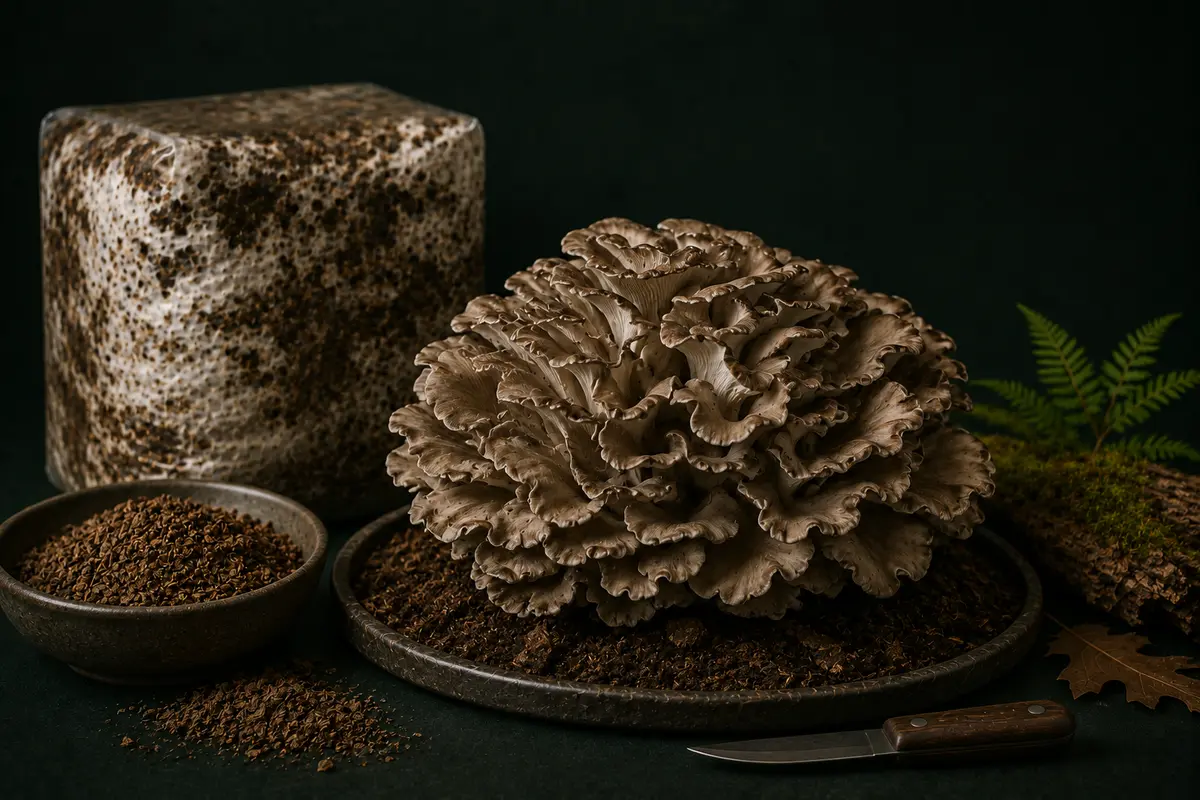
A first hen of the woods grow often ends the same way: a tray of buried sawdust sits untouched for weeks, then one morning a fist sized gray rosette pushes up through the surface without warning. That is the honest answer to how to grow hen of the woods mushrooms at home. A hardwood based substrate gets colonized, buried or cased, and left to wait, usually months longer than something like oyster mushrooms would take.
At Foxfire Mushrooms, this question comes up constantly from growers who tried a Blue Oyster kit and want something with more challenge. Growing maitake at home means trading speed for patience from the very first step.
Quick Facts — Species: Grifola frondosa – Difficulty: Intermediate to advanced – Grain colonization: 3-6 weeks at 70-75°F – Bulk block colonization: 6-10 weeks – Fruiting temperature: 50-60°F – Fruiting humidity: 85-95%
Most gourmet mushrooms fruit off the surface of a colonized block once it is cracked open to fresh air and light. Maitake does not work that way, and this is the piece of biology that trips up most people new to growing it. In the forest, this fungus lives underground at the base of oak trees for years before it produces the rosette shaped fruiting body people forage for. Cultivating Grifola frondosa is really an exercise in recreating an underground root zone rather than an open air fruiting environment, and it needs darkness, cool soil temperatures, and pressure from being buried to trigger primordia formation. A detail almost no beginner guide mentions: even a fully colonized block usually needs about thirty days of rest at warm room temperature after colonization finishes before a temperature drop will actually trigger fruiting. Moved to fruiting conditions too soon, the block simply stalls.
Three things are required: a clean starting culture, a bulk substrate for the mycelium to colonize, and a container or bed for burial. Grain spawn is the more common starting point rather than running liquid culture straight to bulk substrate, since grain colonizes faster and builds a stronger base before it reaches the harder hardwood material maitake prefers. Grain typically finishes colonizing in three to six weeks at 70 to 75 degrees Fahrenheit, noticeably slower than the ten to fourteen days expected from an oyster strain on the same grain.
Colonized grain gets mixed into a hardwood sawdust and bran substrate at roughly a one to four ratio, then left to fully colonize before being transferred into soil or a casing layer for fruiting. A large sawdust block can take six to ten weeks to colonize fully. This grain to bulk method sits at the center of most maitake mushroom cultivation, whether the spawn came from a supplier or was inoculated from a syringe at home.
Between grain colonization, bulk colonization, the rest period, the temperature trigger, and fruiting itself, total time from spawn to harvest usually lands between three and five months. Compared to faster species, this timeline feels slow because it is slow, and rushing any single stage tends to cost more time than it saves.
Both approaches work for maitake, but they behave differently, and picking the wrong one for a given setup wastes weeks.
| Factor | Grain Spawn | Sawdust Spawn |
| Colonization speed | Faster, 3 to 6 weeks | Slower, closer to a species native pace |
| Best for | Mixing into bulk substrate at scale | Direct inoculation of logs or stumps |
| Contamination risk | Slightly higher if not handled sterile | Lower once established, more forgiving |
| Cost per grow | Lower for indoor tub or bag setups | Higher, but better for outdoor log culture |
| Beginner friendliness | Easier to source and handle | Better suited to growers with some experience |
For an indoor buried substrate setup, grain spawn is the more practical starting point. For inoculating an oak log or stump outdoors to mimic how maitake grows in nature, sawdust or plug spawn suited to log culture makes more sense.
Maitake is not usually the mushroom recommended for first grow. It rewards patience and punishes shortcuts in a way Blue Oyster or Lion’s Mane simply do not. A grower who has already run a successful kit and knows how to hold humidity steady and watch for contamination is in a good position to try it. Someone who has never grown anything before is generally better off starting with an oyster or Lion’s Mane kit first, building intuition for what healthy mycelium looks and smells like before committing months to a mushroom that fruits underground.
This is the part most beginner guides gloss over, and where a lot of grows fail. Once the substrate is fully colonized white through and has finished its rest period, it does not get cracked open to air like an oyster block. Instead, it gets buried, either directly in a container of moist, pasteurized soil or under a casing layer of peat and vermiculite, with only a shallow covering of an inch or two above the block. That covering layer holds moisture, blocks light, and creates the pressure and gas exchange conditions that signal the mycelium has reached the surface and can form a fruiting body. Skip the burial and the mushroom is being asked to fruit in an environment it does not recognize as ready.
Once the block is buried, the casing layer needs to stay moist but never soggy, misted lightly every day or two rather than drenched, with humidity held in the eighty five to ninety five percent range. Maitake prefers cooler fruiting temperatures than most gourmet species, ideally fifty to sixty degrees, mimicking the fall temperature drop that triggers wild flushes. A basement, cool closet, or dedicated fruiting chamber with some air exchange all work, and fresh air matters, since caps can come out thin and leggy if carbon dioxide builds up.
Cultivation studies on this species have found that low light during colonization helps the mycelium initiate primordia, while brighter light later supports the fruiting body once it forms. A dim, indirect light source near the buried block during the final weeks before pinning tends to help, rather than the total darkness typically used for a species like Lion’s Mane.
The whole cluster gets harvested by cutting it at the base rather than pulling individual lobes, which keeps dirt and casing material out of the mushroom itself. Fresh maitake holds up well in the refrigerator for a week to ten days when stored loosely wrapped in paper rather than sealed in plastic, which traps moisture and speeds spoilage. It also dries well when sliced thin, making it useful for building a pantry of dried stock and seasoning for the off season.
This usually traces back to skipping burial, never giving the block a real temperature drop, or moving it to fruiting conditions too soon after colonization. There is also an uncomfortable fact worth knowing before committing months to a grow: a meaningful share of Grifola frondosa strains simply do not fruit reliably, a documented quirk of this species and not something unique to home growers. Sourcing spawn from a supplier that tests strains for fruiting reliability, not just contamination, matters more here than with most other gourmet species.
Thin, pale, leggy growth once pins appear points to insufficient fresh air exchange, and a few minutes of fanning the fruiting chamber daily usually corrects it within a flush or two. Green or black mold on the substrate before burial means contamination got in during mixing, and that batch typically needs to be discarded, since it spreads through dense hardwood material quickly.
Foxfire does not currently sell a dedicated maitake beginner kit the way it does for Blue Oyster, Lion’s Mane, and Shiitake, since the fruiting timeline and burial requirement make it a poor fit for a simple mist and wait box. What Foxfire does stock is fully colonized grain spawn and lab grade liquid culture syringes out of the Longmont lab, both of which offer a clean starting point for a bulk hardwood substrate build. Scott has walked several customers through this exact project, and catching a substrate ratio or timing mistake early saves a lot of frustration down the line.
For a grower who has already run a kit or two and is ready for something slower and more rewarding, this is a solid next project. A bag of fully colonized grain spawn or a liquid culture syringe from the Longmont lab is a clean starting point, and a grower consultation booked before mixing the first batch of substrate can catch setup mistakes before they cost months. It is the kind of grow that tests patience, but there is nothing quite like watching that first rosette finally break the surface after months of waiting.
Expect three to five months total from spawn to first harvest, including colonization, a rest period, burial, and fruiting itself.
Something that mimics soil is required, either an actual pasteurized soil bed or a peat and vermiculite casing layer. Without burial or casing, the mycelium rarely gets the trigger it needs to fruit.
Yes, a drop into the fifty to sixty degree range triggers fruiting by mimicking the fall temperature shift that signals wild maitake to flush. Room temperature often delays or prevents pinning altogether.
They are the same mushroom, Grifola frondosa. Maitake is the Japanese name, meaning dancing mushroom, while hen of the woods refers to its resemblance to ruffled feathers.
Yes, liquid culture inoculates grain spawn as the first step, and that colonized grain then gets mixed into bulk hardwood substrate. Going culture to grain to bulk is generally easier than culture straight to bulk.
Usually it comes down to skipping burial, rushing the rest period, or never giving the block a real temperature drop. In rarer cases the strain itself may simply be a poor fruiter, a known issue with this species.
It is meaningfully more difficult and far slower, with a timeline measured in months rather than days. It makes a good second or third project once the basics of contamination control and humidity have been learned from an easier species.
Share this article
The honest framing We grow mushrooms indoors for a living and we do not sell anything foraged. So this page has no commercial interest in

The farm tour Forty-five minutes, walking the whole cycle in the order it happens: substrate mixing, the sterilisation and inoculation side, the dark incubation room,

Why this county is unusual Boulder County has an established open-space and agricultural-land programme, a population that will pay a premium for provenance, a dense
Grab a beginner-friendly kit and apply what you just read —
or start with our beginner’s guide to find the right first grow.