

- Scott Brenton
- 10 min read
The first time a grow bag sat untouched on the kitchen counter for eleven days with nothing but a faint dusting of white fuzz, it
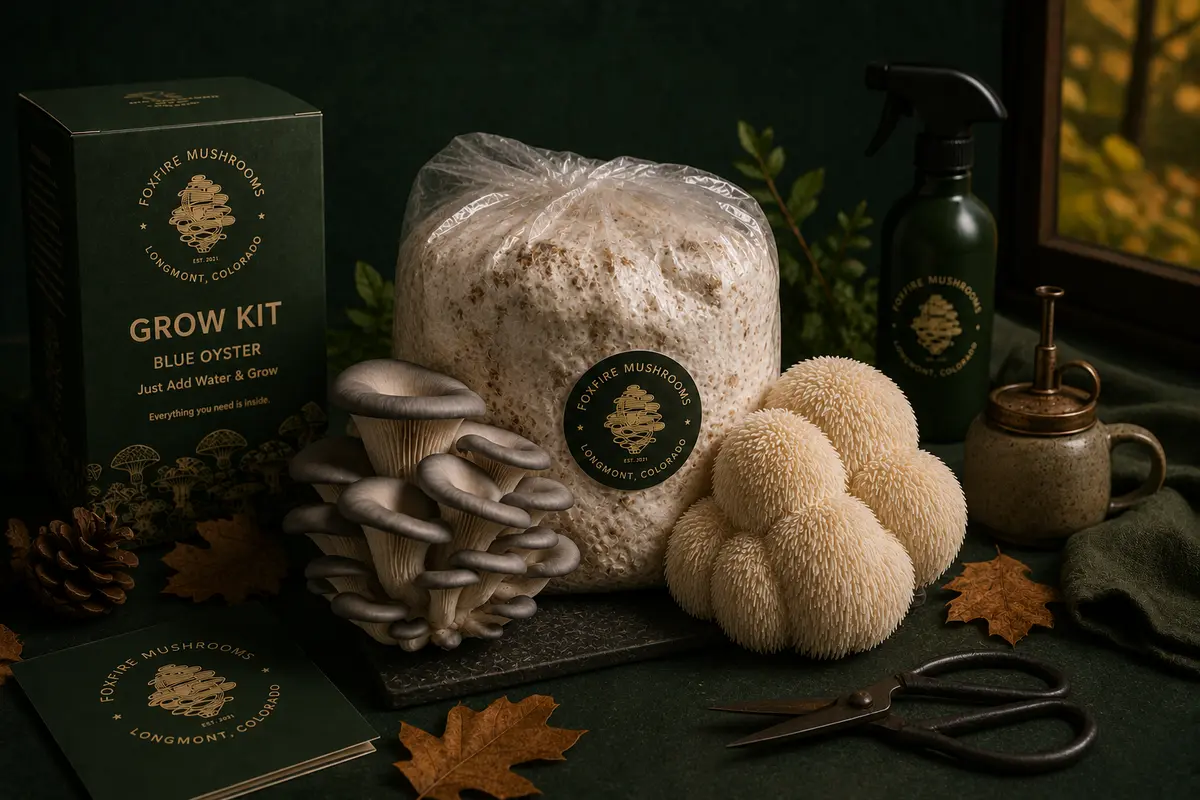
The window unit in my kitchen finally came down last week, and the second the house held steady at seventy degrees, I pulled a Blue Oyster block out of the closet where it had been waiting since August, cool to the touch and smelling faintly like fresh rain.
The best time to start a mushroom grow kit for fall is right as your indoor temperatures settle into the mid sixties to low seventies, usually late September through October for most of the country, because that range is exactly what oyster and lion’s mane blocks want for a clean first flush. I have been growing with kits from Foxfire Mushrooms for two seasons now, and fall is my favorite time to start one, mostly because the air finally stops fighting you.
Quick Facts — Ideal fruiting temperature: 65-75°F – First pins appear: 5-9 days after fall start – First flush: 7-14 days – Best fall species: Blue Oyster, Lion’s Mane, Shiitake – Kit shelf life unopened: 2-3 weeks refrigerated – Foxfire kit price: $27.99
Mushrooms are not fussy about the calendar, they are fussy about temperature and humidity, and fall hands you both of those without any extra work. Summer heat pushes a lot of homes above eighty degrees, which stresses oyster mushrooms and can lead to leggy, thin stemmed fruit or stalled pins. Winter brings dry forced air heat that pulls moisture out of a fruiting chamber faster than most beginners expect. Fall sits between the two, and indoor temperatures naturally drift into the range oyster and lion’s mane mushrooms actually prefer.
There is a second reason fall works so well that has nothing to do with the thermostat. Once the weather cools, most people shut their windows for the season, which changes how much fresh air reaches the block. In early fall, before a house is fully sealed up for winter, that shift is gradual enough to still sit in the range mushrooms like. Push into deep winter with the windows shut and a furnace running, and carbon dioxide can build up around the kit. Mushrooms respond to CO2 concentration the way a plant responds to light, and too much of it is one of the real, less talked about reasons fruit can come in with long thin stems and small caps.
Check a few things before you cut the bag. It should be solid white through the plastic, almost like a block of tofu, with no green, black, or pink fuzzy patches. A little light yellow liquid pooling in the bag is normal and is just metabolic moisture, not a problem. Give it a gentle squeeze, it should feel firm and dense, not soft or spongy. Foxfire only ships blocks once they have grown all the way through, which is part of why their live arrival guarantee holds up even after a few days in transit, and a sealed block will keep well in the fridge for two to three weeks. Past that, it tends to respond more slowly once you bring it back to room temperature.
You can technically start a grow kit indoors any month of the year. What changes is how much extra work you have to do to fake the conditions the mushrooms actually want.
| Factor | Fall Start (Sept to Nov) | Winter Start (Dec to Feb) |
| Room temperature | Usually 65 to 75°F naturally | Often needs a space heater or humidifier combo |
| Ambient humidity | Moderate, easier to maintain | Very dry from forced air heat, needs more misting |
| Fresh air exchange | Windows still open sometimes | Sealed house, needs manual fanning |
| Pinning speed | 5 to 9 days typical | Can stretch to 10 to 14 days |
| Effort required | Low, mostly daily misting | Moderate, needs a humidity tent and fanning routine |
Winter grows are doable, and plenty of Foxfire’s growers do it successfully every year, but fall is the season where a beginner gets a strong first flush without buying extra gear.
Yes, on both counts. In summer, especially if you run air conditioning, you may have been misting twice a day just to keep the air from drying out too fast. Once fall moisture levels rise on their own, misting that often can oversaturate the block and invite contamination, particularly green mold. I switched to once a day, first thing in the morning, the moment the weather turned here in Colorado, and my pins responded within a couple of days. Fanning matters just as much once windows start staying shut more often.
A block sitting in a closed room for days without air movement builds up carbon dioxide around it, and that buildup pushes fruit toward long thin stems instead of short, thick, meaty caps. Ten seconds of fanning with a folded piece of cardboard, two or three times a day, is usually enough once the house starts closing up for the season.
Not every species responds to the season the same way. Oyster mushrooms, in Blue and Pink varieties, are the fastest and most forgiving fall growers because they pin quickly once temperatures cooperate. Lion’s Mane also does well in fall, though it tends to be slower and more sensitive to fresh air exchange, so crack the bag a bit more than you think you need to. Shiitake is the outlier. Its ideal fruiting temperature sits lower than the others, closer to sixty to sixty five degrees, which makes late fall into early winter its real sweet spot rather than early September.
If you wait until late November or December to start a block that has been sitting in your fridge since summer, colonization can quietly slow or partially stall from the extended cold storage, even if the block still looks fine. I learned this with a Shiitake block I let sit too long. It still fruited, but the first flush came in noticeably smaller and took almost three extra days to pin compared to a fresh block, and I remember being disappointed pulling such a light harvest after waiting so long for it. If you have a kit waiting, start it within the first few weeks of cooler weather arriving rather than treating fall as a three month window you can start anytime within.
At the Foxfire lab in Longmont, every batch of grain spawn and every liquid culture syringe is tested for contamination before it becomes part of a grow kit, and blocks ship only once the mycelium has completely taken over the substrate rather than sent out early expecting it to finish growing in transit. That testing step matters more in fall than people realize, because the same rising humidity that makes fruiting easier also makes contamination spread faster in an improperly sterilized substrate. A block that leaves Longmont fully done and properly tested is ready to fruit the moment it hits ideal temperature, part of why Foxfire has built a base of more than 1,200 verified customers who keep coming back each season. It also carries the same live arrival guarantee and free shipping over $75 that applies to every order, fall included.
A spot near a window with indirect light, out of direct sun and away from heating vents, is usually enough. If your home has forced air heat that kicks on overnight, keep the block a few feet from any vent so it is not getting blasted with dry warm air while you sleep. A humidity tent made from a clear plastic bag with a few holes poked in it can help if your house runs dry, but leave those holes uncovered rather than sealing the bag shut, since that airflow keeps carbon dioxide from building up as the season gets colder.
If you have a kit sitting in the fridge, this is a good week to pull it out, check it over, and make the cut. If you have not ordered yet, now is a smart time to grab one, since the temperature swing that makes fall easy on mushrooms will not last once winter heat takes over.
Foxfire also runs a wholesale program for restaurants and markets, plus one on one grower consultations if you want an experienced eye on your setup. Shop the current grow kit lineup at Foxfire Mushrooms, and if you are unsure which species fits your space, their team is easy to reach for a quick recommendation before you order.
Late September through October is ideal for most of the country, once indoor temperatures settle between sixty five and seventy five degrees without you needing a heater or air conditioning to get there.
Yes, plenty of people do, you will just likely need to manage humidity more closely and fan the block a few times a day since forced air heat dries out most homes and windows tend to stay shut.
Often yes, thicker stemmed and fuller capped, since summer heat can push oysters toward thin, leggy growth while fall temperatures sit closer to what oysters actually prefer.
Two to three weeks is the safe window for a Foxfire kit. Beyond that, colonization can slow and your first flush may come in smaller.
This usually means carbon dioxide is building up around the block because a window or door that used to be open all summer is now shut. Fan the area a few times a day and it should correct within the next flush.
Usually less. Fall air holds more moisture than summer air conditioning did, so many growers cut from twice daily misting down to once a day.
Blue Oyster is the most forgiving and fastest to pin, which makes it the kit most beginners start with heading into fall.
Share this article
The first time a grow bag sat untouched on the kitchen counter for eleven days with nothing but a faint dusting of white fuzz, it

The first flush off a Blue Oyster block usually comes as a surprise to a first time grower, especially since Blue Oyster can begin pinning
Grab a beginner-friendly kit and apply what you just read —
or start with our beginner’s guide to find the right first grow.